NJ & NYC Commercial & Residential Garage Door
In 2026, choosing a sectional door means balancing insulation, appearance, security, and daily use. A steel door may suit a busy family garage, while a full-view aluminum design can brighten a workshop or modern home. Carriage-house panels add traditional character. The right choice depends on the opening, local climate, available headroom, and how often the door cycles.
“[Insert a verified quotation about sectional door selection.]” — [Expert name and professional title]
A verified expert quotation belongs here; no source articles or quote were provided, so attributing invented words would be misleading. Once confirmed, the expert’s credentials and original source should accompany the quote. That small check matters.
This guide compares leading sectional door types by construction, insulation, finish, and practical fit. It also considers details people notice every day: cold air near the floor, visible hinges, window placement, and the sound of panels moving along the tracks. Specifications vary by manufacturer, and a high insulation rating cannot fix poor installation. There is no universal winner. A door that looks striking in a showroom may feel wrong beside a narrow driveway or a low ceiling. The comparisons ahead offer a grounded starting point, not a substitute for measuring the opening and checking product documentation.
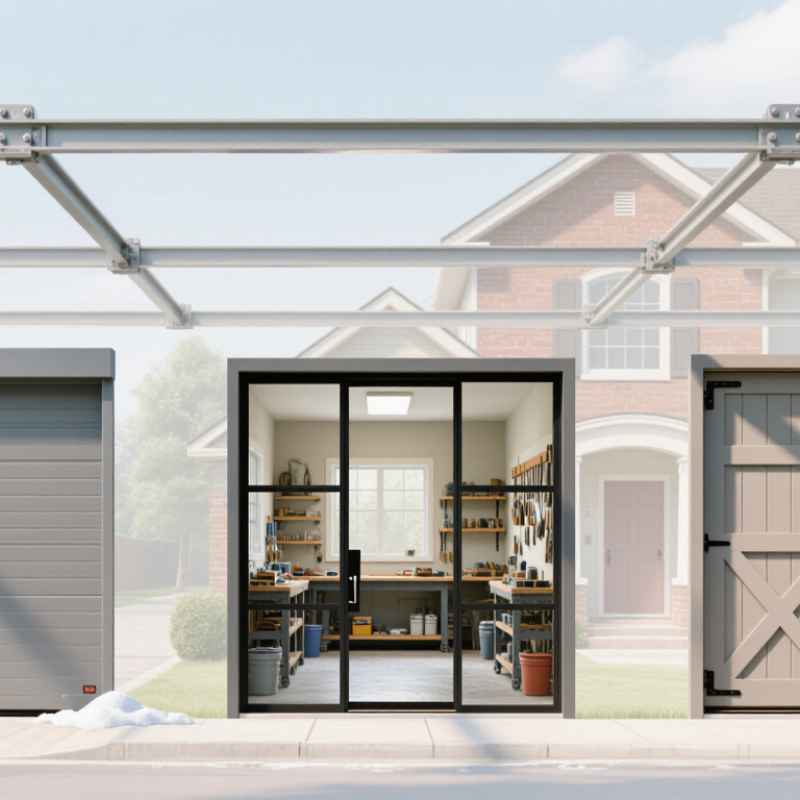
A sectional door is built from horizontal panels joined by hinges, allowing the curtain to bend as it rises. Rollers fitted to the panel edges travel inside vertical and overhead tracks. Common options include insulated steel panels, lightweight aluminum sections, timber finishes, and glazed panels that admit daylight. Each material affects weight, upkeep, and thermal performance. The details matter.
When opened, the door moves upward and rests beneath the ceiling, rather than swinging out into the driveway. A torsion or extension spring counterbalances its weight, so a suitable system can be lifted with controlled effort. Cables, brackets, and fasteners carry loads and need periodic inspection for wear or looseness. Smooth travel depends on aligned tracks and clean rollers. Quiet, when aligned. Seals along the floor and frame help limit drafts, dust, and rain, though an uneven threshold can still leave small gaps. Small gaps matter. Keep the opening clear, and use the door’s safety features as directed by its installer. A door that jerks, binds, or makes new noises deserves attention; continuing to operate it may worsen the fault.
Common sectional door panel constructions, compared by the number of material layers in a typical panel.
Single-skin panels use one steel layer. Insulated panels may combine a steel skin with a foam core, while sandwich panels enclose the foam between two steel skins. In all these designs, hinged sections connect to rollers that follow vertical and overhead tracks as the door opens. Layer count describes construction, not overall quality or insulation performance.
In 2026, insulated steel sectional doors stand out for homes that face cold winters, hot summers, or frequent garage use. Their foam-filled panels can reduce heat transfer, while flexible perimeter seals help limit drafts and dust. Check the stated insulation rating, panel thickness, and seal design rather than judging by appearance alone. A well-fitted door matters as much as the panel itself.
Full-view aluminum doors with glass panels suit garages used as studios or contemporary living spaces. They bring in daylight, but privacy, glare, and heat gain deserve attention. Frosted or tinted glazing can soften views, though it may reduce brightness. Wood-look composite doors offer a warmer appearance with less routine upkeep than many natural-wood options. Still, finishes can fade, and “low maintenance” does not mean maintenance-free.
Tips: Measure the opening and ceiling clearance before choosing a track system. Ask an installer to check spring balance, panel weight, and safety sensors. Small measuring errors can cause costly delays. It’s easy to overlook the details.
| Sectional Door Type | Typical Construction | Best Suited For | Key Advantages | Points to Consider |
|---|---|---|---|---|
| Insulated Steel | Steel door sections with an insulating core; designs and insulation ratings vary by model. | Homes and garages where temperature control, durability, or reduced outside noise is a priority. | Combines a durable exterior with insulation options; available in a wide range of panel styles. | Compare the stated insulation rating, section construction, seals, and installation quality. Steel finishes can be scratched or dented. |
| Non-Insulated Steel | Typically single-layer steel sections without an insulating core. | Detached garages, storage areas, and other spaces where insulation is not a main requirement. | Generally lighter and simpler in construction than insulated steel options, with low-maintenance exterior finishes available. | Provides less thermal separation and sound reduction than an insulated door. Check the door’s resistance to dents and corrosion for the local environment. |
| Aluminum and Glass | Aluminum framing with glass or glazed panels; glazing can be clear, tinted, or obscured. | Modern homes, studios, and garages where daylight and a contemporary appearance are important. | Allows natural light into the space and offers a clean, modern look. Aluminum is relatively resistant to rust. | Glass affects privacy and heat transfer; glazing choices matter. Check frame strength, glass safety specifications, and the door’s insulation performance. |
| Wood | Wood sections, which may be solid wood or wood-based construction depending on the product. | Traditional or custom-designed homes where natural appearance is a priority. | Offers distinctive grain and finish options and can be made in varied architectural styles. | Often requires more upkeep than factory-finished steel or aluminum. Weight, moisture exposure, and finish maintenance should be considered. |
| Fiberglass | Fiberglass exterior panels, often supported by a frame and sometimes designed with a wood-grain appearance. | Locations where a wood-like look and resistance to moisture are desirable. | Can resist moisture-related problems and avoids some routine refinishing associated with natural wood. | Construction varies, and some fiberglass surfaces may be affected by impact or prolonged sunlight. Check local climate suitability and repair options. |
| Composite or Faux-Wood | Engineered or layered materials designed to provide a wood-style appearance; exact composition varies. | Homes seeking a wood-inspired finish with a different maintenance profile from natural wood. | Offers a range of decorative finishes and can provide a consistent appearance across panels. | “Composite” covers different constructions, so compare material details, finish durability, weight, and warranty terms rather than relying on the label alone. |
Selection note: The best choice depends on the garage’s use, climate, desired appearance, available headroom, and insulation needs. Insulation ratings and construction vary by product, so compare published specifications for the complete door assembly.
Residential sectional doors are usually chosen for fit, appearance, insulation, and quiet operation. A homeowner may open the door only a few times daily, but a heavy panel still needs correctly matched springs and tracks. Commercial doors face wider openings, heavier traffic, and more demanding operating conditions. The U.S. Energy Information Administration’s 2018 Commercial Buildings Energy Consumption Survey counted about 5.9 million commercial buildings, covering roughly 96 billion square feet. That scale reflects very different site needs, from a small workshop to a busy loading bay.
DASMA technical guidance treats door construction, installation, and operation as system-level considerations. Residential doors commonly use lighter panels and standard track layouts; commercial sectional doors may need reinforced panels, higher-cycle springs, and hardware suited to repeated use. Insulated models can help limit heat transfer, but insulation alone does not guarantee an efficient opening. Gaps at the floor, worn seals, and poor installation matter too. And actual service life varies.
Tips: Measure the opening, headroom, and side room before choosing a door. For commercial use, record daily cycles and ask for the spring cycle-life rating in writing. Check safety devices and seals during routine inspections. A rating is useful, but it is not a maintenance plan.
In 2026, sectional doors commonly use steel, aluminum, wood, or composite materials. Steel is a practical choice for busy garages because it resists dents better than thin aluminum. Aluminum panels weigh less, which can reduce strain on the operating system, but they may show impacts more easily. Wood offers a warm, natural appearance, though it needs regular care in damp or sunny conditions.
Insulation affects comfort, noise, and energy use. Many insulated doors place foam between two panel skins, creating a sturdier barrier than a single-layer panel. Check the stated R-value, but treat it as one part of the decision. Seals around the door and careful installation matter too. A well-insulated panel cannot stop drafts if cold air slips beneath the bottom edge.
Small gaps matter. On a chilly morning, a poorly sealed garage can feel noticeably colder near the floor. Consider how the garage is used: a workspace may benefit from stronger insulation, while a detached storage garage may not need the same level. Thicker panels can improve rigidity, but they also add weight and may require suitable springs and hardware. One detail is easy to overlook: insulation performance can vary across panel designs, even when materials sound similar. Check the full door specifications and ask how the door will be fitted to the opening.
Choosing a sectional door starts with the opening, not the catalogue. Measure its width and height at several points; older garages are rarely perfectly square. Then check headroom, side clearance, ceiling obstructions, and whether a car can park close to the door. Small details matter. Standard-lift tracks suit many garages, while low-headroom or high-lift systems may solve unusual layouts. Ask a qualified installer to confirm the track design before ordering, especially if beams or pipes cross the ceiling.
Match the panels to the space’s actual conditions. Insulated steel can help moderate temperatures and reduce rattling, though results depend on seals and installation. Aluminium or glazed sections bring in daylight, but may offer less privacy and need more frequent cleaning. For a workshop, consider durable surfaces and weather seals; for a heated room, compare insulation ratings. Check for spring and cable safeguards, accessible manual release, and a suitable cycle rating. The thickest panel is not always best. Climate, budget, and headroom can change the choice, so recheck measurements before committing.