What Are the 2026 Top Types of Rolling Steel Doors?

Choosing the right rolling steel door in 2026 requires more than comparing prices or appearance. Buildings face different demands, including heavy traffic, wind exposure, security risks, fire separation, and limited maintenance access. A warehouse loading bay needs a different solution than a retail storefront or underground parking entrance.

Richard Viets, a long-time technical expert associated with the Door and Access Systems Manufacturers Association, offers a practical principle: “The right door must match the opening, the operation, and the environment.” That idea guides this overview of the leading rolling steel door types expected to shape the 2026 market. It also reminds buyers to look beyond product labels.

Performance comes first.

The main categories include service doors, fire-rated rolling doors, insulated rolling doors, security grilles, and high-cycle doors. Each design solves a specific problem. A fire-rated model may protect compartment boundaries, while an insulated door can reduce heat transfer around a busy loading area. A high-cycle door may suit facilities where forklifts pass through hundreds of times daily.

Real conditions matter. Dust, salt air, uneven floors, and careless impacts can shorten service life. Some buyers may also overestimate automation benefits. Smart controls cannot correct poor installation or neglected inspections. This guide compares the strengths, limitations, and practical applications of each rolling steel door type. It leaves room for judgment, because no single design fits every building. Even experienced specifiers can miss details when site measurements are rushed.
What Are the 2026 Top Types of Rolling Steel Doors?

What Are Rolling Steel Doors and How Do They Work?

What Are the 2026 Top Types of Rolling Steel Doors?

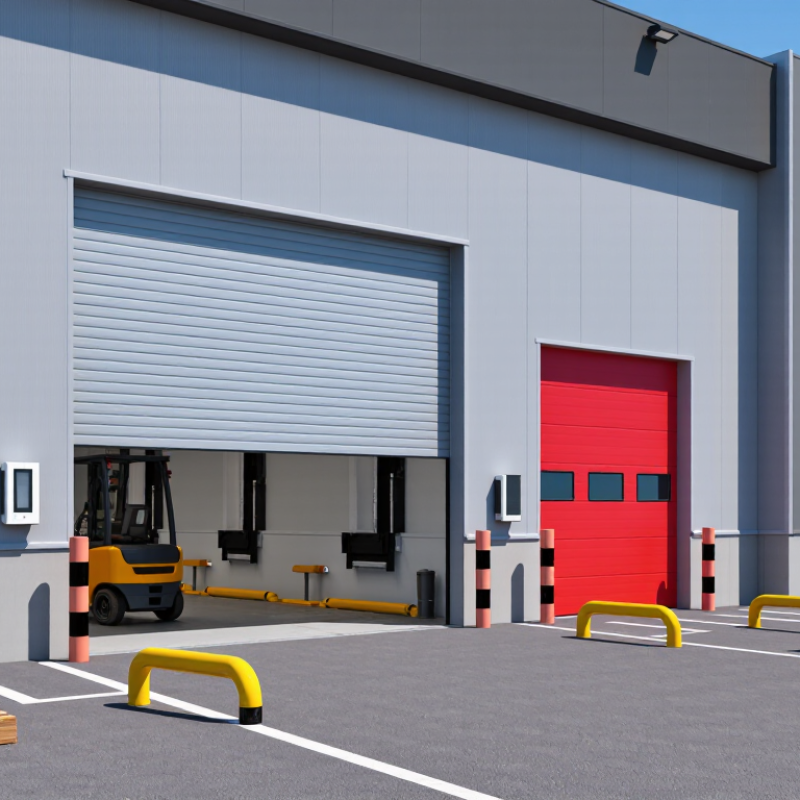
Rolling steel doors use interlocking steel slats that travel vertically and coil above an opening. Guides keep the curtain aligned, while a bottom bar closes against the floor. Operation may use a hand chain, spring counterbalance, or electric motor. Simple in principle. Installation is not.

In 2026, common choices include service doors, insulated rolling doors, fire-rated doors, high-performance doors, and rolling grilles. Service doors suit warehouses and loading areas with frequent traffic. Insulated models reduce heat transfer between conditioned interiors and outdoor air.

The U.S. Energy Information Administration’s 2018 Commercial Buildings Energy Consumption Survey reports that space heating used about 32% of commercial building energy. That figure makes thermal separation worth examining, especially in large facilities.

Fire-rated assemblies require listed components, proper clearances, and documented inspections. NFPA 80 requires periodic inspection and testing of these systems.

High-performance doors combine faster cycles with tighter controls. They can reduce waiting time at busy docks, although speed claims vary by opening size and maintenance quality. Rolling grilles provide visibility and airflow for retail or parking applications, but they offer less security than solid curtains.

A practical survey checks wind exposure, lintel strength, floor level, cycle frequency, and emergency access before selection.

Fortune Business Insights estimates the global rolling doors market will grow from approximately 3.11 billion U.S. dollars in 2023 to 4.52 billion by 2032. Market growth does not remove basic mistakes. A well-rated door can still perform poorly when guides are misaligned or sensors are ignored.

What Are the Main Types of Rolling Steel Doors in 2026?

What Are the Main Types of Rolling Steel Doors in 2026?

Rolling steel doors now serve warehouses, retail entrances, parking areas, and industrial rooms. Fortune Business Insights reports that the global rolling doors market reached about USD 2.61 billion in 2023. It also projects continued growth through 2032. Service rolling doors remain common because they offer strong protection and simple operation. Insulated rolling doors reduce heat transfer in temperature-sensitive facilities. Fire-rated rolling doors close automatically during a fire event. They are designed for compartment protection, not daily ventilation. Rolling security grilles provide visibility and airflow while controlling access. Counter shutters suit smaller openings, such as service counters and interior windows.

Tips: Match the door type to the opening, cycle rate, wind exposure, and fire requirement. Check the manufacturer’s test documents and installation conditions. A heavier door is not always a better door. Poor alignment can create noise, friction, and early wear. In busy facilities, high-cycle operators may matter more than thicker slats.

The 2026 choice should reflect actual site behavior. A warehouse may need an insulated service door at its loading bay. A parking structure may favor a perforated security grille. A commercial kitchen may require a compact counter shutter. The National Fire Protection Association emphasizes that fire doors need inspection, testing, and maintenance. These tasks are often overlooked. Energy savings also depend on opening frequency, sealing quality, and local climate. Market forecasts describe broad demand, but they cannot replace a site survey. Measure carefully. Ask what will happen after years of daily use.

What Are the 2026 Top Types of Rolling Steel Doors? - What Are the Main Types of Rolling Steel Doors in 2026?

Rolling Steel Door Type Primary Function Typical Construction Common Applications Main Advantages Key Considerations Typical Operation
Service Rolling Doors General-purpose protection for vehicle, pedestrian, and material-access openings. Interlocking steel slats or curved curtain sections, bottom bar, guides, hood, and spring or motor-operated barrel. Warehouses, workshops, loading areas, parking structures, retail back rooms, and utility spaces. Durable Space-saving Versatile Limited thermal insulation unless insulated slats and perimeter seals are specified. Wind-load requirements must match the opening location. Manual chain, push-up, or electric motor.
Insulated Rolling Steel Doors Security and access control with improved temperature management and noise reduction. Double-wall steel slats or panels containing insulating material, commonly with weather seals and thermal breaks. Climate-controlled warehouses, food and beverage facilities, distribution centers, service bays, and exterior openings. Lower heat transfer Reduced air leakage Quieter operation Heavier and usually more costly than non-insulated doors. Insulation performance depends on slat design, seals, installation, and opening size. Usually motor-operated; manual release may be provided.
Fire-Rated Rolling Doors Compartmentalization of openings to help limit the spread of fire and smoke. Fire-rated steel curtain, guides, bottom bar, fusible-link or approved automatic release system, and tested hardware. Industrial plants, commercial buildings, kitchens, garages, warehouses, and openings in fire-rated walls. Fire separation Automatic closing Code-focused design The required fire rating, listing, mounting condition, release method, inspection, and maintenance must comply with the applicable building and fire codes. Motorized, chain-operated, or automatic gravity closing after release.
Rolling Grilles Provide security while maintaining visibility, airflow, daylight, and visual connection between spaces. Open-pattern steel or aluminum grille curtain made from links, rods, or perforated sections. Shopping centers, storefronts, parking garages, transit facilities, concourses, and interior security zones. High visibility Ventilation Compact storage They provide less weather protection and privacy than a solid curtain. Mesh or grille spacing should suit the required security level. Manual push-up, chain, or motorized operation.
Counter Rolling Shutters Secure smaller service openings such as counters, transaction windows, and pass-throughs. Compact interlocking slats, guides, sill or counter interface, and a small overhead barrel. Retail counters, pharmacies, concession areas, reception desks, laboratories, and service windows. Compact Fast access control Easy to integrate Designed for smaller openings and lighter duty than full-size service doors. Countertop, sill, and jamb conditions require accurate measurement. Push-up, crank, spring-assisted, or motorized.
High-Performance Rolling Doors Support frequent cycles and rapid opening and closing where workflow efficiency is important. Reinforced steel curtain or high-cycle rolling assembly with heavy-duty guides, drive system, controls, and safety sensors. Distribution centers, manufacturing plants, logistics hubs, parking facilities, and busy service entrances. High cycle capability Reduced idle time Automation-ready Cycle frequency, opening speed, safety devices, electrical service, maintenance access, and impact protection should be evaluated before selection. Electric motor with control station, sensors, and optional access-control integration.
Perforated Rolling Steel Doors Combine a more open appearance with physical security and partial airflow. Perforated steel slats or panels arranged as a rolling curtain, generally supported by side guides and an overhead barrel. Retail storefronts, parking areas, equipment rooms, ventilation openings, and architectural security applications. Airflow Partial visibility Security screening Perforation reduces resistance to airflow blockage but also provides less privacy, weather protection, and impact resistance than a solid curtain. Manual or motorized, depending on opening size and cycle requirements.
Storm and Wind-Resistant Rolling Doors Protect openings exposed to severe wind, flying debris, or demanding exterior conditions. Reinforced steel curtain, wind-rated guides, stronger end locks, bottom bar, anchorage, and tested assembly components. Coastal buildings, industrial facilities, emergency-service buildings, storage areas, and exposed loading bays. Enhanced wind resistance Robust security Exterior durability Performance depends on the certified design pressure, building structure, guide anchorage, opening width, and local exposure conditions. Manual or motorized; emergency operation may be required.
Selection note: Actual performance varies by door size, steel gauge, curtain profile, wind rating, fire rating, insulation design, cycle frequency, controls, installation quality, and applicable local codes. Always verify project-specific requirements before specifying a rolling steel door.

How Do Rolling Steel Door Types Differ in Design and Performance?

Rolling steel doors differ most in their curtain, guides, operating cycle, and safety function. Service doors typically use galvanized steel slats for durability and straightforward maintenance. Insulated models add a foam-filled curtain, reducing heat transfer and street noise around loading areas. High-performance doors use tighter guides, stronger springs, and faster motors. That speed matters in busy warehouses, where a door may cycle dozens of times daily.

Fire-rated doors are designed differently. They must close reliably during a fire and limit flame movement through an opening. NFPA 80:2022 requires fire door assemblies to receive documented inspection and testing at least annually. That requirement is not decorative paperwork. A blocked guide or damaged fusible link can change real performance. DASMA technical guidance also separates wind-load design from impact resistance, which buyers sometimes treat as the same feature. They are not.

Scale matters. The U.S. Energy Information Administration’s 2018 Commercial Buildings Energy Consumption Survey counted about 5.9 million commercial buildings covering 97.8 billion square feet. Across that footprint, poor door selection can create repeated air leakage, maintenance calls, and production delays. The U.S. Department of Energy’s building-envelope guidance emphasizes controlling uncontrolled airflow. Still, no type wins everywhere. A cold-storage opening needs insulation and sealing; a parking facility may value ventilation and corrosion resistance instead. My own caution is simple: advertised cycles rarely predict actual service life without site-specific traffic, impact, and maintenance data.

What Are the 2026 Top Types of Rolling Steel Doors?

How do rolling steel door types differ in design and performance?

How to read the chart: The relative capability index uses a 1–5 scale, where 1 indicates lower capability and 5 indicates higher capability. Traditional and insulated rolling steel doors are suited to general commercial and industrial openings, while fire-rated doors prioritize compartment protection. Rolling grilles emphasize visibility and airflow, and high-performance rolling doors are designed for frequent, rapid operation. Actual performance depends on the tested door assembly, cycle rating, wind-load rating, insulation value, fire-resistance certification, and installation conditions.

Which Rolling Steel Door Type Fits Different Building Applications?

Choosing a rolling steel door begins with the building’s daily rhythm. A warehouse with frequent forklift traffic needs a high-performance rolling door. Its fast cycle reduces open time, drafts, and collision risk. A standard service door suits storage rooms, workshops, and low-frequency openings. It costs less, but speed is not its strength.

Fire-rated rolling doors fit openings where compartment protection matters. They close automatically during a fire event and require compatible walls, sensors, and maintenance. Security grilles work better for retail corridors and interior partitions. They provide visibility and airflow, but they cannot replace a solid security door in exposed locations.

Insulated rolling steel doors support conditioned warehouses, loading bays, and cold-storage areas. Their slats limit heat transfer, although insulation alone cannot fix poor building design.

The U.S. Energy Information Administration’s 2018 CBECS counted about 6.2 million commercial buildings, covering roughly 97 billion square feet. That scale explains why one door specification cannot serve every application. Grand View Research reports continued growth in the global industrial doors market, driven by logistics, manufacturing, and infrastructure investment. Exact forecasts vary. They deserve scrutiny.

In practice, measure opening size, cycle frequency, wind exposure, impact risk, and required fire rating. Check the surrounding wall assembly, too. A door may perform perfectly while the installation fails. I have seen specifications focus on curtain thickness and ignore operator access. That is a costly oversight. Choose the door around people, traffic, climate, and maintenance habits—not appearance alone.

What Should Buyers Consider Before Choosing a Rolling Steel Door?

Rolling steel doors now serve several roles: service doors, insulated doors, security grilles, and fire-rated doors. Buyers should match the door to the opening, not only its appearance. A busy warehouse may need a high-cycle motor, while a retail counter may need a perforated grille for visibility. Fire-rated openings require tested assemblies, correct labels, and compatible hardware. NFPA 80 requires documented inspection and testing for many fire door assemblies, but local requirements still need confirmation.

Energy performance deserves careful attention. The U.S. Energy Information Administration’s 2018 Commercial Buildings Energy Consumption Survey reported that space heating used about 32% of commercial building energy. A poorly sealed rolling door can allow cold air, dust, and moisture through every day. Insulated slats, perimeter seals, and a properly sized bottom bar can reduce those losses. However, insulation is not a magic answer. Frequent opening may matter more than the panel’s rated value.

Check wind-load ratings, cycle ratings, clear opening dimensions, operator access, and emergency release details. Request test documents, maintenance intervals, and replacement-part availability. A door that looks strong may still fail under repeated impact. Experience in warehouses shows that small alignment problems often become expensive repairs. I would also question optimistic energy claims unless they include installation conditions and testing methods. The right choice is usually less glamorous, but easier to inspect, repair, and operate safely.