What Are the Top Types of Call Overhead Doors?

Choosing a call overhead door is not simply a matter of comparing prices. The opening’s size, traffic frequency, climate, security needs, and available headroom all affect the best solution. A busy loading dock may need a rapid roll-up door, while a warehouse facing cold weather could benefit from an insulated sectional model. A retail showroom may require glass and aluminum panels for visibility. Each type solves a different problem.

Commercial door specialist David M. Beck explains, “The right overhead door must fit the building’s daily work, not just its opening.” That practical view matters. A door that looks impressive can still perform poorly when exposed to forklifts, salt air, repeated impacts, or inadequate maintenance. Real operating conditions often reveal weaknesses that product brochures overlook. They always do.

This guide examines the top types of call overhead door systems, including sectional steel, rolling steel, high-speed, fire-rated, and full-view designs. It considers construction, insulation, operating speed, safety features, repair access, and long-term service demands. Some categories overlap, and no single model suits every facility. That is worth admitting. A careful site survey remains essential before selecting tracks, springs, operators, or safety sensors. Measurements can also expose unexpected limits, such as low ceiling clearance or poor structural support. By comparing these practical details, facility owners and contractors can make a more informed decision. The goal is not to promote one style. It is to connect each door type with the work it must reliably perform.
What Are the Top Types of Call Overhead Doors?

Overhead Door Classification Under ANSI/DASMA 102: Structure, Use, and Cycles

What Are the Top Types of Call Overhead Doors?

Overhead Door Classification Under ANSI/DASMA 102: Structure, Use, and Cycles

ANSI/DASMA 102 focuses on sectional overhead doors, not a simple popularity ranking. These doors use hinged panels, vertical and horizontal tracks, counterbalance springs, and an operator. Their classification depends on structure, installation conditions, wind exposure, insulation, and operating duty. A warehouse door may look ordinary, yet its hardware faces very different demands from a conditioned loading dock.

Usage changes the correct specification. A low-traffic storage room may need a standard-duty sectional door. A busy distribution facility needs stronger tracks, reinforced panels, safer springs, and a higher cycle rating. Industry schedules commonly compare 10,000, 25,000, 50,000, and 100,000 operating cycles. The exact rating should match daily traffic, not sales language. A door opening 20 times daily reaches about 7,300 cycles yearly.

Energy performance also matters. The U.S. Energy Information Administration’s 2018 Commercial Buildings Energy Consumption Survey reported that space heating represented 32% of commercial site energy use. An insulated overhead door can help reduce heat loss, especially when it closes quickly and seals evenly. Still, a thick panel cannot correct damaged weather seals or poor installation.

A tidy classification can mislead. Dust, forklift impacts, moisture, and uneven floors often shorten real service life. Review ANSI/DASMA 102 requirements, manufacturer cycle data, structural loads, and the building’s traffic log together. The best door is sometimes less impressive, but better matched.

Sectional Steel Doors: R-Values Up to R-18 and 10,000-Cycle Hardware

Sectional steel overhead doors are a practical choice for garages, workshops, and service buildings. Their insulated panels can reach R-values up to R-18. That rating helps slow heat transfer through the door surface. It can also improve comfort near loading areas during cold mornings.

However, an R-value is not the whole performance story. Panel joints, window sections, seals, and installation gaps can reduce real-world efficiency. I have seen well-insulated doors lose noticeable performance because the bottom seal was worn. Small gaps matter. Ask for tested values and confirm the insulation thickness before comparing products.

The hardware deserves equal attention. Systems rated for up to 10,000 cycles are designed for frequent daily operation. A cycle usually means one opening and one closing. A busy facility may reach that figure sooner than expected. Track alignment, spring condition, rollers, and hinges all affect service life. Regular inspections help identify unusual noise, vibration, or uneven movement before damage spreads. Still, cycle ratings are estimates, not guarantees. Heavy use, poor maintenance, and harsh weather can shorten that lifespan. A qualified door technician should verify the required spring balance and mounting details for the building. Reliable installation is where the specification becomes real.

What Are the Top Types of Call Overhead Doors? - Sectional Steel Doors: R-Values Up to R-18 and 10,000-Cycle Hardware

Door Type Typical Construction Typical R-Value Range Typical Cycle Rating Best Applications Key Advantages
Sectional Steel Door Interlocking steel panels with optional polyurethane or polystyrene insulation R-4 to R-18 10,000 cycles commonly available Warehouses, service garages, fire stations, agricultural buildings, and commercial facilities Strong thermal performance, customizable panel designs, good weather sealing, and broad size availability
Rolling Steel Door Interlocking galvanized steel slats that coil above the opening R-0 to R-10 10,000 to 50,000 cycles, depending on hardware Industrial facilities, loading areas, storage rooms, and security-sensitive openings Compact overhead storage, durable construction, and strong resistance to impact and forced entry
Aluminum Full-View Door Aluminum framing with tempered glass or transparent polycarbonate panels R-2 to R-8 10,000 to 25,000 cycles Automotive showrooms, retail spaces, fire stations, and modern commercial buildings High daylight transmission, contemporary appearance, corrosion resistance, and visibility between interior and exterior areas
Insulated Glass or Acrylic Door Framed sections fitted with insulated glass or acrylic glazing R-3 to R-10 10,000 to 25,000 cycles Commercial garages, hospitality facilities, retail areas, and climate-controlled service bays Improved daylight and visibility with better insulation than single-pane glazing
Fabric High-Speed Door Flexible PVC curtain with reinforced edges and a guided operating system R-0 to R-4 100,000 cycles or more on selected systems Distribution centers, food-processing areas, manufacturing plants, and controlled-environment spaces Very fast operation, reduced air exchange, efficient traffic flow, and low space requirements
Fire-Rated Overhead Door Steel curtain or sectional assembly designed and tested for fire resistance Varies by tested assembly Typically 10,000 cycles or more Industrial partitions, warehouses, parking structures, and openings requiring compartmentation Helps limit the spread of fire and smoke when installed and maintained according to its listing

Note: R-values and cycle ratings vary by panel thickness, insulation material, door size, operating frequency, hardware selection, and applicable testing standards. Always verify the rated assembly and installation requirements for the specific project.

Rolling Steel Doors: 20–24 Gauge Slats and 100,000+ Cycle Options

What Are the Top Types of Call Overhead Doors?

Rolling steel doors remain a practical choice for warehouses, service bays, and high-traffic openings. Their 20–24 gauge slats balance strength, weight, and repairability. A 20-gauge slat is typically thicker than a 24-gauge slat, but gauge alone does not define performance.

The Door and Access Systems Manufacturers Association’s Technical Data Sheet 102 emphasizes matching door construction with opening size, usage, and environmental exposure. Some rolling steel doors carry 100,000+ cycle ratings, which suit busy facilities with frequent daily operation. That number is a test-based expectation, not a guarantee. Dirt, poor alignment, and neglected springs can shorten service life quickly.

Tips: Ask for the tested cycle rating, slat gauge, wind-load data, and maintenance schedule. Check whether the rating covers the complete door assembly. It matters. NFPA 80 also calls for documented inspection and maintenance practices for applicable fire door assemblies. Local conditions deserve attention, too. Coastal air, forklift impacts, and temperature swings may change the specification. In practice, many buyers focus on the highest cycle count and overlook installation quality. That is a costly assumption. A qualified installer should verify clearances, guides, barrel support, and daily operating frequency before recommending the final door.

High-Speed Fabric Doors: Opening Speeds Up to 100 Inches per Second

What Are the Top Types of Call Overhead Doors?

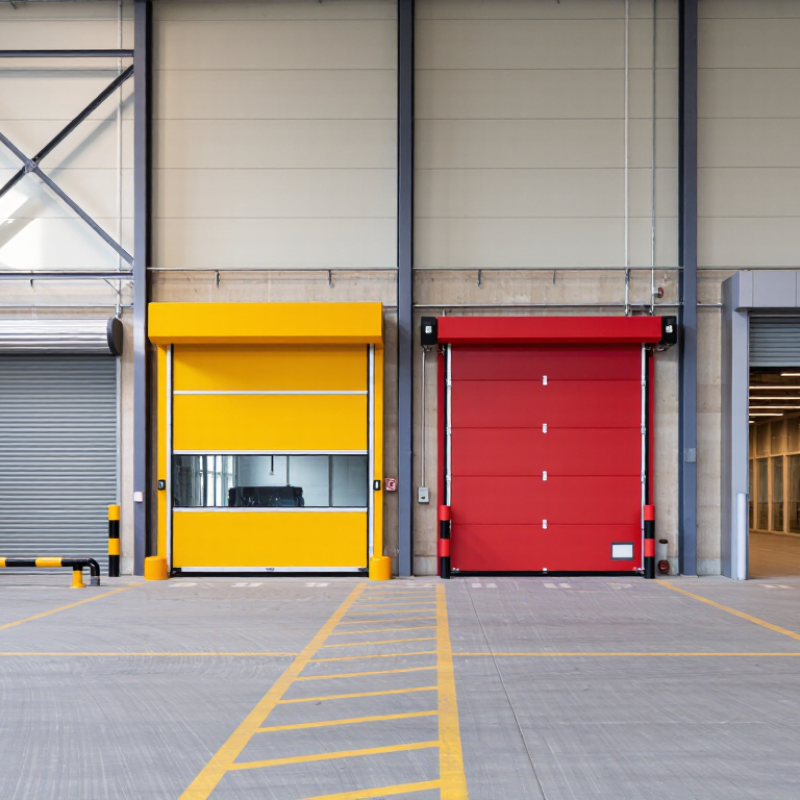
Overhead doors include insulated steel, sectional glass, rolling, and high-speed fabric designs. High-speed fabric doors deserve attention where traffic is frequent. Some models open at up to 100 inches per second, or about 8.3 feet per second. That speed reduces the time a doorway remains exposed. It also helps stabilize indoor temperatures during busy shift changes.

The U.S. Department of Energy’s Building America research indicates that air leakage can represent roughly 5% to 30% of heating and cooling energy use. The actual result depends on climate, opening size, pressure, and building operation. High-speed fabric doors can limit this exchange, especially in warehouses, food facilities, and distribution areas. Their flexible curtains can also reduce impact damage compared with rigid panels. They are not magic.

A practical site review should measure cycles per hour, wind exposure, washdown needs, and nearby pedestrian traffic. A door opening at 100 inches per second still needs controlled closing and reliable safety sensors. The International Door Association emphasizes scheduled inspection and maintenance for commercial door systems. Yet maintenance plans are often too general. Cleaning the curtain, checking guides, and testing reversing devices should match real operating conditions. A slower door may perform better if the surrounding workflow is poorly designed.

Fire-Rated Rolling Doors: UL 10B/10C Compliance and 3-Hour Ratings

Fire-rated rolling doors are a critical type of call overhead door for warehouses, hospitals, and utility rooms. UL 10B and UL 10C are fire-test procedures, not interchangeable marketing terms. UL 10C evaluates positive-pressure fire exposure, which can reveal leakage around the door edges and joints. A three-hour rating describes tested endurance under prescribed conditions. It does not make the entire wall fireproof.

NFPA’s Fire Loss in the United States During 2023 reported about 1,388,500 fires and $21.9 billion in direct property damage. That data gives facility managers a practical reason to verify every opening. NFPA 80 requires periodic inspection and testing of fire door assemblies, commonly on an annual basis. Check the label, guides, curtain, bottom bar, fusible links, and release mechanism. Details matter. A blocked guide can prevent a curtain from closing when smoke and heat rise.

Field inspections often uncover poor maintenance rather than weak steel. Dust collects inside the guides. A door may close too slowly, or not close completely. That is a serious gap. The International Building Code also ties opening protection to the surrounding wall and occupancy conditions, so a three-hour door is not automatically correct for every opening. Confirm the tested assembly, wall rating, clearances, and inspection records with a qualified professional. Labels can mislead when copied without the full listing.