What Are the Top 10 Types of Rolling Steel Garage Doors?

Choosing a rolling steel garage door involves more than comparing colors, prices, and surface finishes. Door size, wind exposure, security needs, operating frequency, and available headroom can change the right specification. A compact residential garage may need a quiet insulated curtain, while a busy service bay may require a heavier commercial assembly. Small details matter.

Industry reports support this wider view. Grand View Research identifies continued demand for durable industrial and commercial door systems, driven by construction, logistics, maintenance, and facility modernization. Fortune Business Insights also reports steady growth in the global rolling shutter market, with security, weather resistance, and energy performance influencing purchasing decisions. These reports do not rank every garage-door design, however. Their categories often overlap. That limitation deserves attention.

This guide examines ten practical types of rolling steel garage doors, including insulated, fire-rated, high-performance, security, perforated, and wind-certified options. Each type serves a different operating environment. Steel gauge, curtain profile, guides, hood design, motor selection, and cycle rating affect real-world performance. A door that looks strong may still perform poorly with weak guides or incorrect installation. That happens.

The discussion follows established guidance from organizations such as the Door and Access Systems Manufacturers Association and the International Door Association. It also reflects common field considerations, including inspection access, repair planning, noise control, and safe daily operation. No single door suits every building. The best choice balances protection, speed, serviceability, budget, and long-term reliability. Expect trade-offs, not magic solutions.
What Are the Top 10 Types of Rolling Steel Garage Doors?

Definition and Core Features of Rolling Steel Garage Doors

What Are the Top 10 Types of Rolling Steel Garage Doors?

Rolling steel garage doors are vertically coiled assemblies made from interlocking steel slats. They rise above the opening instead of swinging outward. This design saves driveway space and protects busy facilities from accidental impact. Core components include slats, guides, a bottom bar, a barrel, springs, and an operating system.

The ten common configurations include service doors, insulated doors, fire-rated doors, security grilles, high-cycle doors, counter doors, perforated doors, wind-rated doors, stainless-steel doors, and manually operated doors. Their differences depend on slat thickness, insulation, cycle frequency, visibility, and fire performance. Insulated slats reduce heat transfer, but they do not replace a complete building envelope. That distinction matters.

The International Energy Agency reported in its 2023 Global Status Report that buildings consume about 30% of global final energy. Therefore, door openings deserve practical attention. A tight guide, flexible seal, and correctly adjusted bottom bar can reduce drafts around large openings. Still, performance varies with installation quality. A durable curtain can perform poorly when guides are misaligned.

In field inspections, I look for uneven gaps, noisy movement, damaged slats, and repeated control failures. These details often reveal deeper maintenance problems. The U.S. Department of Energy also identifies building efficiency as a major route for reducing operational energy use. Yet, selecting a door only by its lowest purchase price remains a common mistake. Cycle ratings, opening size, local weather, safety controls, and repair access should shape the specification.

The Top 10 Types of Rolling Steel Garage Doors

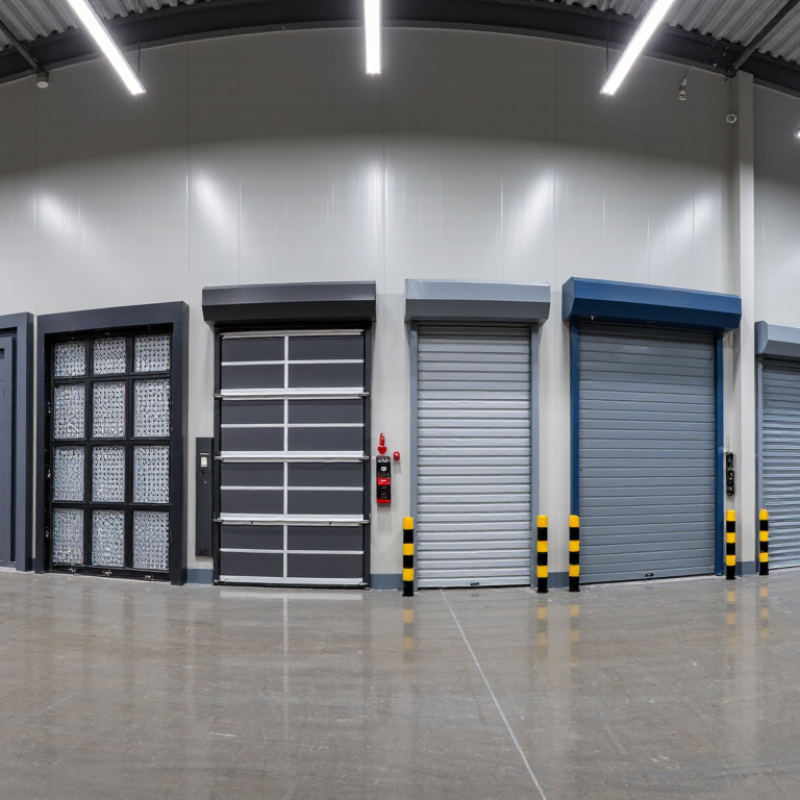
The top 10 types of rolling steel garage doors serve different spaces and operating needs. Single-skin doors offer an economical choice for unheated garages and storage areas. Insulated steel doors reduce heat transfer and soften outside noise. Perforated doors improve airflow while maintaining a physical barrier. Vision-panel doors add daylight and help workers see approaching vehicles. Fire-rated doors support compartment protection when tested and installed as certified assemblies.

High-speed rolling doors suit busy facilities where quick opening reduces air exchange. Wind-rated doors provide stronger resistance in exposed locations, but local requirements still matter. Corrosion-resistant doors use protective finishes for damp, coastal, or chemical-prone environments. Rolling service doors handle frequent daily use in workshops and commercial garages. Security grille doors provide visibility and controlled access, although they offer less weather protection.

Tips: Match the door to its opening size, cycle frequency, climate, and safety controls. Measure the clear width, headroom, and side room before ordering. Ask a qualified installer to verify spring balance, guides, brakes, and emergency release features. Fire-rated and wind-rated models need documented ratings, not just attractive labels. My practical mistake was focusing on the steel gauge first; the wrong insulation or control system caused more trouble. Maintenance is easy to postpone, but dirt in the guides can quickly make operation rough. A monthly visual check catches problems earlier.

How Each Rolling Steel Door Type Works and Where It Fits

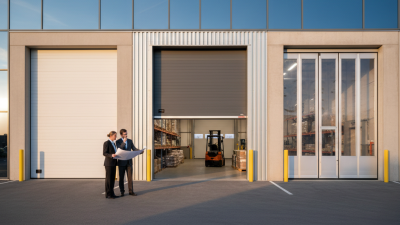
Rolling steel garage doors differ by curtain design, operating speed, security level, and installation space. Service doors use interlocking steel slats that roll above commercial openings. They suit warehouses, workshops, and parking areas with regular traffic. Fire-rated doors close automatically when heat activates their release mechanism. They fit garages requiring compartment protection and documented safety performance. Insulated rolling doors contain a foam core that reduces heat transfer and outside noise. They work well in attached garages and temperature-sensitive facilities. Perforated doors use slats with small openings for airflow and visibility. They suit mechanical rooms, loading zones, and ventilated storage areas.

Rolling grilles use open links instead of a solid curtain, balancing security and visual access. They fit parking garages, storefronts, and interior service counters. Counter doors use compact curtains for small openings, such as reception windows or parts rooms. High-performance doors combine reinforced curtains with fast motors and controlled braking. They suit busy facilities where repeated cycles can expose weak hardware. Speed matters here. A slow door can interrupt traffic and increase contact risk.

Heavy-duty security doors use thicker slats, stronger guides, and reinforced bottom bars. They fit exposed garages and high-use industrial entrances. Hurricane-rated doors rely on engineered guides, end locks, and tested wind resistance. Coastal buildings need this design, but site calculations remain essential. Self-storage roll-up doors use lightweight curtains and compact springs for individual units. They prioritize simple operation and limited clearance. No type fits every opening. Field checks matter. Measure headroom, side space, cycle frequency, drainage, and control access before selecting a curtain. An overlooked guide detail can undermine an otherwise excellent door.

What Are the Top 10 Types of Rolling Steel Garage Doors? - How Each Rolling Steel Door Type Works and Where It Fits

No. Rolling Steel Door Type How It Works Best-Fit Applications Main Strengths Important Considerations
1 Service Door Interlocking steel slats roll upward around a barrel above the opening. The curtain is guided vertically by side tracks. Commercial garages, workshops, warehouses, loading areas, and utility buildings. Durable, space-efficient, relatively simple, and available in manual or motorized configurations. Requires adequate headroom for the barrel and side room for guides; insulation varies by construction.
2 Insulated Rolling Steel Door Double-wall or multi-layer slats contain insulating material, while the curtain winds around a barrel during opening. Heated or cooled garages, workshops, service facilities, and buildings exposed to outdoor temperatures. Improves thermal performance, reduces air leakage, and can help moderate interior noise. Costs more and usually has a larger barrel or heavier curtain than a basic non-insulated door.
3 Heavy-Duty Industrial Door A reinforced curtain, stronger guides, and a robust barrel assembly are designed to withstand frequent cycles and demanding conditions. Manufacturing plants, distribution centers, fleet garages, and high-traffic industrial openings. Suitable for large openings, repeated daily operation, and harsh working environments. Needs professional structural review, suitable controls, and scheduled maintenance.
4 Fire-Rated Rolling Door The steel curtain closes manually or automatically and is designed to limit the spread of fire for a tested period under specified conditions. Fire separations, commercial garages, industrial buildings, parking areas, and openings in rated walls. Provides a code-oriented barrier where fire-resistance performance is required. The complete assembly must be properly tested, labeled, installed, inspected, and maintained according to local requirements.
5 Security Rolling Grille Perforated or open-pattern metal links roll into a compact overhead coil, allowing visibility and airflow when closed. Parking garages, storefronts, service counters, equipment areas, and interior security openings. Balances physical security, ventilation, visibility, and compact storage. Does not provide the same weather seal, privacy, or insulation as a solid curtain.
6 Perforated Rolling Steel Door Solid steel slats include regularly spaced perforations that form a rolling curtain while maintaining partial airflow and visibility. Retail backrooms, parking facilities, ventilation-sensitive storage areas, and service openings. Offers more visual screening and security than an open grille while allowing air movement. Perforations reduce weather resistance and may allow dust, light, or small airborne particles through.
7 Counter Shutter A compact, lightweight steel curtain rolls above a counter or service opening instead of covering a full-height doorway. Transaction windows, concession stands, reception counters, laboratories, and interior pass-throughs. Requires little floor space and provides quick separation after business hours. Not intended for vehicle access or large exterior garage openings; counter dimensions must be coordinated carefully.
8 Wind-Load-Rated Rolling Door Reinforced guides, end locks, slats, and anchoring resist pressure from specified wind conditions while the curtain rolls overhead. Coastal properties, exposed garages, hurricane-prone regions, and buildings with high design wind pressures. Improves resistance to wind pressure when the entire installed system meets the required rating. The required rating depends on opening size, building design, local wind speed, and installation conditions.
9 High-Performance Rolling Door A powered curtain opens and closes at higher operating speeds than conventional rolling doors, often using a specialized control system. Busy warehouses, logistics facilities, parking structures, and areas requiring frequent traffic flow. Reduces open-door time, supports workflow efficiency, and can limit air exchange in conditioned spaces. Higher purchase and service costs; sensors, controls, and safety devices require regular testing.
10 Manual Rolling Steel Garage Door A balanced steel curtain is raised and lowered by hand using a pull chain, handle, or direct push, without an electric operator. Small garages, low-traffic storage rooms, detached workshops, and locations without convenient power. Simple operation, lower equipment complexity, and continued use during power interruptions. Becomes less practical for large, heavy, frequently used, or difficult-to-reach openings.

Note: The appropriate rolling steel door depends on opening dimensions, cycle frequency, security needs, fire and wind requirements, insulation goals, available headroom, and applicable local building codes.

Key Differences in Security, Insulation, Operation, and Cost

What Are the Top 10 Types of Rolling Steel Garage Doors?

Rolling steel garage doors differ sharply in security, insulation, operation, and cost. The ten common types are service doors, insulated service doors, fire-rated doors, high-performance doors, perforated grilles, security grilles, counter doors, mini-storage doors, wind-rated doors, and exterior rolling doors. Solid slats provide stronger privacy and impact resistance. Open grilles improve visibility but offer weaker weather protection. Fire-rated models need tested assemblies and proper release hardware. NFPA 80 requires inspection and maintenance practices for listed fire doors.

Insulation changes daily comfort. Double-wall slats with foam cores reduce heat transfer and street noise. ASHRAE 90.1-2022 shows that thermal requirements vary by climate zone, so one insulation value cannot fit every garage. The U.S. Department of Energy also stresses weatherstripping and air sealing around attached garages. Small gaps matter. High-performance doors operate faster, reducing drafts during repeated deliveries. Standard service doors usually use chain hoists or motors, while lighter counter doors may use compact spring systems.

Cost follows complexity. RSMeans 2024 cost data indicates that installed rolling-door prices can range from roughly 1,500 to over 20,000 dollars, depending on size, rating, controls, and site work. Basic service doors cost less. Fire-rated, insulated, and wind-rated models cost more. My estimate remains imperfect because local labor and opening conditions change the final bill. A cheaper door may also demand more repairs when used hundreds of cycles daily. That trade-off deserves careful review.

This comparison uses indicative industry benchmarks on a 1–5 scale. Security, insulation, and operating performance reflect typical construction and applications, while cost represents relative installed cost: 1 = lower and 5 = higher. Actual performance and pricing vary with dimensions, material thickness, wind rating, fire rating, controls, and installation conditions.

How to Choose the Right Rolling Steel Garage Door Type

What Are the Top 10 Types of Rolling Steel Garage Doors?

How to Choose the Right Rolling Steel Garage Door Type

Choosing among ten rolling steel garage door types starts with the building’s actual demands. Common options include service doors, insulated doors, fire-rated doors, security grilles, perforated grilles, counter shutters, heavy-duty doors, high-speed doors, wind-rated doors, and custom-sized systems. Each type solves a different problem. A busy warehouse may need fast opening cycles, while a parking garage may need ventilation and visibility.

Measure twice. Check the opening width, headroom, side clearance, and floor level carefully. Then consider daily cycles, impact exposure, insulation needs, and noise. An insulated curtain can reduce drafts in a heated workshop. A perforated grille may suit a retail opening where airflow and visibility matter. Fire-rated doors require approved assemblies, correct labels, and regular inspection. They are not interchangeable with ordinary security doors.

Field inspections often reveal a costly mistake: buyers focus on the curtain but ignore the guides, operator, and mounting surface. The complete system must match the wall structure and expected wind pressure. Ask for cycle ratings, maintenance requirements, emergency release details, and test documentation. Local building and fire rules also influence the final choice. A low initial price can mislead. Reliable performance usually depends on proper sizing, qualified installation, and scheduled lubrication and safety checks. Painful, but true.