China Top 10 24 Door Parcel Locker Suppliers?
China’s parcel locker industry is expanding beyond simple storage. A well-designed 24 door unit can support apartments, offices, campuses, and neighborhood pickup points. It can reduce missed deliveries while giving couriers a clearer handover process.
InPost founder Rafał Brzoska has said, “The future of delivery is out-of-home delivery.” His view reflects a wider shift toward secure, convenient, and organized last-mile collection. However, selecting a supplier requires more than comparing product photos or factory prices. Buyers should examine steel thickness, compartment dimensions, touchscreen reliability, weather protection, software integration, remote monitoring, and after-sales service. These details matter when a locker stands outdoors through heat, rain, and repeated daily use.
This guide reviews China’s top 10 24 door parcel locker suppliers from a practical purchasing perspective. It considers manufacturing experience, customization capability, certifications, delivery records, and technical support. It also considers whether suppliers can provide clear drawings, sample testing, spare parts, and realistic production schedules. Some companies appear strong online but offer limited evidence of field performance. That deserves attention.
Not every supplier fits every project.
A compact 24 door locker may suit a residential lobby, while a reinforced outdoor model may be necessary for a busy transport hub. Pricing can also hide installation, software, shipping, and maintenance costs. Our comparison aims to make those differences easier to see. The ranking is not absolute, because local climate, access control, parcel volume, and integration needs can change the best choice. Even experienced buyers should verify current specifications before signing a contract.
What Is a 24-Door Parcel Locker and How Does It Work?
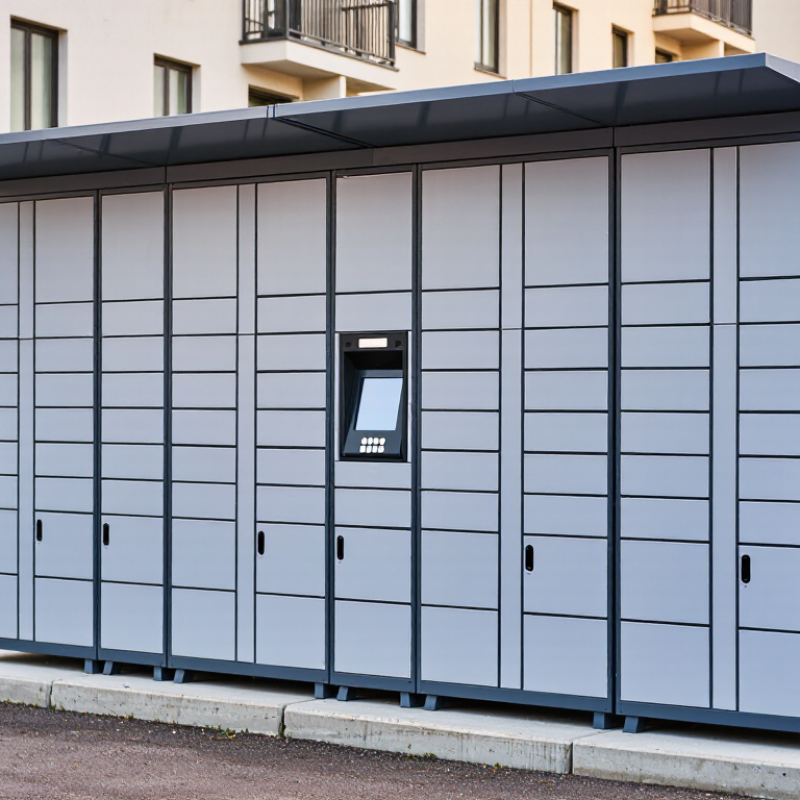
A 24-door parcel locker is a secure cabinet with 24 individually controlled compartments. It receives parcels when recipients are unavailable. Each door usually has an electronic lock, scanner, status light, and delivery screen. The cabinet connects to software through Wi-Fi, Ethernet, or a cellular network. A courier scans the parcel, selects an available compartment, and closes the door. The system then sends a pickup code or mobile notification to the recipient. At collection, the recipient enters the code or scans a QR code. Only the assigned door opens.
The cabinet may include cameras, reinforced panels, internal lighting, and sensors that confirm door closure. Temperature control is optional, so food or sensitive products require suitable specifications. During supplier evaluations, check steel thickness, lock durability, software logs, and recovery procedures after network failure.
Power backup matters in apartment entrances and office lobbies. A well-designed interface should remain readable under bright sunlight and simple enough for older users. Small details matter.
Twenty-four doors can support moderate daily volume, but capacity depends on parcel sizes and collection speed. A single large package may occupy several compartments. This is often overlooked. Maintenance teams should inspect hinges, scanners, drainage, and touchscreens regularly. Remote monitoring helps, yet it cannot replace physical checks. Poor installation, weak lighting, or an inconvenient location can reduce usage, even when the hardware appears reliable. Suppliers should provide clear testing records, training, warranty terms, and measurable service response times.
China’s Top 10 24-Door Parcel Locker Suppliers
China’s Top 10 24-Door Parcel Locker Suppliers
China’s 24-door parcel locker suppliers serve dense residential areas, campuses, and office compounds. The format balances capacity with a compact footprint.
China’s State Post Bureau reported 175.09 billion express parcels in 2024, representing 21.5% annual growth.
This volume keeps automated collection equipment in strong demand. The 2024 Global Parcel Shipping Index also identifies China as the world’s largest parcel market by volume. These figures support careful supplier screening, not rushed purchasing.
Among China’s top ten 24-door parcel locker suppliers, buyers should compare cabinet steel thickness, door alignment, screen brightness, barcode accuracy, and remote monitoring.
A 24-door unit should support repeated daily use without unstable locks. Check performance at temperatures below freezing and above 40°C. Ask for documented failure rates. Ask for spare-part availability, too.
Field experience shows that installation quality often affects reliability more than the cabinet design. A clean interface can still hide weak network recovery. That deserves testing.
Suppliers should provide factory inspection records, electrical safety documentation, software update procedures, and clear warranty terms. Some specifications remain difficult to compare because testing methods differ between factories. Independent sampling and a short pilot period are sensible.
Key Features, Technologies, and Customization Options
China’s top 10 24 door parcel locker suppliers are often compared by more than price.
In real installations, cabinet strength, software stability, and service response matter equally. A 24-compartment unit should use corrosion-resistant steel, reinforced doors, reliable hinges, and weather protection for outdoor sites. Powder coating helps, but exposed coastal locations may need extra treatment.
Modern systems usually support QR codes, PIN access, RFID, touchscreen control, and remote monitoring.
Cloud dashboards can show occupancy, delivery records, temperature alerts, and door faults in real time. API access allows connection with property, logistics, or access-control platforms. However, weak network coverage can interrupt cloud functions. Local data buffering is a valuable backup. It is not optional in every location.
Customization can include compartment sizes, cabinet color, screen language, logo placement, mounting style, and heating or cooling modules.
Some projects need wheelchair-accessible heights or larger compartments for irregular packages. Check electrical safety, privacy protection, accessibility, and local certification before production. I have seen attractive prototypes fail because maintenance access was ignored. Ask for clear replacement procedures, test reports, software update terms, and spare-part availability. A supplier’s factory experience should be verified through sample testing, not only catalog promises. The best configuration is rarely the most complicated one. Simpler can be safer.
How to Choose the Right Supplier for Your Project
China Top 10 24 Door Parcel Locker Suppliers?
Choosing a 24-door parcel locker supplier requires more than comparing factory prices. The Pitney Bowes Parcel Shipping Index reported 161.8 billion parcels worldwide in 2022. This volume increases pressure on delivery speed, security, and collection capacity. Your supplier should provide verified production experience, clear testing records, and references from similar installations. Ask how the locker performs in heat, rain, dust, and repeated daily use.
Check the cabinet material, door hinges, locks, screen visibility, lighting, and emergency access. A 24-door unit should support flexible compartments for small parcels and larger packages. Request evidence of corrosion testing, electrical safety compliance, software protection, and stable API integration. McKinsey has estimated that urban delivery costs could rise significantly without more efficient last-mile systems. Locker placement and service quality therefore matter as much as hardware.
Look beyond the quotation.
Calculate installation, connectivity, maintenance, spare parts, and software fees over five years. Ask for a realistic uptime target and response times for failed doors or payment-free access systems. A pilot installation is valuable, even if it delays purchasing. Paper specifications can mislead. I have seen attractive proposals hide weak local support and unclear warranty limits. Visit the production line when possible, inspect welding and cable protection, and test every door under repeated opening cycles. Measure the details.