NJ & NYC Commercial & Residential Garage Door
How to Choose the Right Automatic Door Supplier?
Choosing the right automatic door supplier is not simply a pricing exercise. It is a decision about safety, uptime, accessibility, maintenance, and long-term responsibility. A door may look impressive in a showroom, yet perform poorly in a busy hospital entrance. The real test begins after installation.
“Reliable access is built through correct specification, careful installation, and consistent maintenance,” says Martin Reeves, an automatic door safety consultant with more than twenty years of industry experience. His point is practical. A capable supplier should understand traffic volume, door weight, opening speed, sensor placement, emergency functions, and the building’s daily users.
Look beyond the product catalogue. Ask how the supplier surveys the site, selects components, tests the system, and responds when the door stops working at 7 a.m. Request project references with similar conditions. A shopping centre, care facility, and small office do not need identical solutions.
Certifications and trained technicians matter. So do spare parts, inspection records, warranty terms, and response times. A low quote can hide expensive service gaps. Sometimes, however, the most expensive proposal is not the most suitable one. That deserves honest scrutiny.
This guide explains how to compare suppliers with clearer judgment. It examines technical competence, safety procedures, installation quality, after-sales support, and total ownership cost. It also considers questions buyers often forget to ask. No supplier is perfect. Even experienced teams can overlook a difficult site condition. The goal is not to find a flawless promise, but a dependable partner willing to identify risks, explain limitations, and correct problems before they affect people.
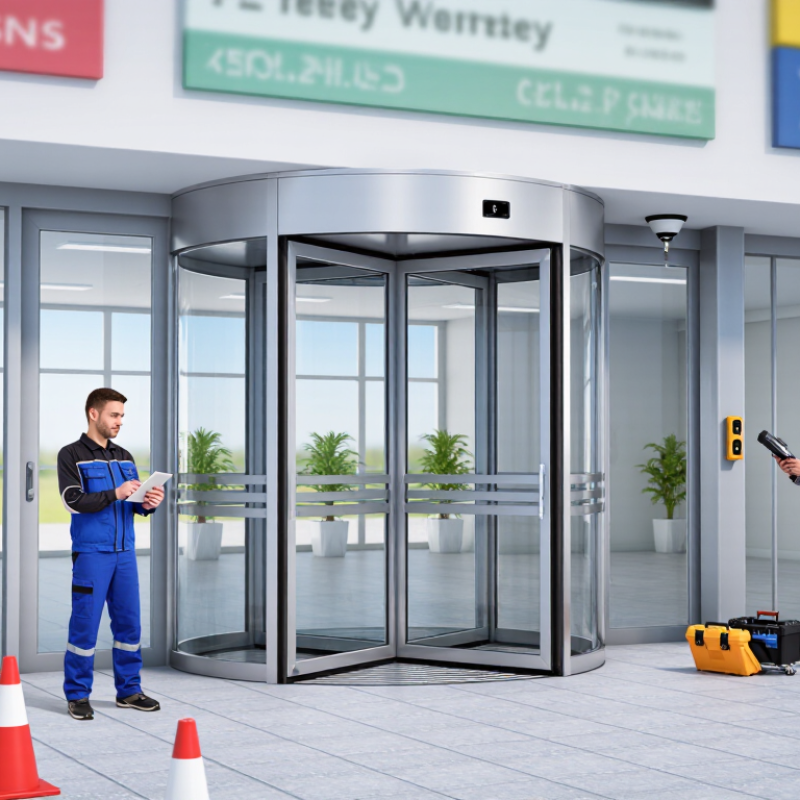
Define Your Automatic Door Requirements and Project Goals
Choosing an automatic door supplier begins before requesting a quotation. Define the door’s job, not merely its appearance. A hospital entrance may require hands-free access, quiet operation, and frequent daily cycles. A small office may need simpler motion control and lower energy use. Record peak traffic, user types, opening width, available headroom, and expected operating hours. Include carts, wheelchairs, stretchers, or bulky deliveries. These details shape the correct door configuration.
Walk the site with an experienced installer or facilities engineer. Measure the opening, floor level, surrounding walls, drainage, and nearby power points. Note wind exposure, rain, dust, temperature changes, and emergency routes. Ask how sensors will detect slow-moving users and where they will be mounted. Confirm manual release, backup operation, obstruction detection, and safe closing speed. Requirements should follow applicable building, accessibility, and fire-safety rules. Written records help prevent vague promises.
Project goals also need measurable targets. Set limits for noise, waiting time, energy consumption, maintenance visits, and acceptable downtime. Keep it measurable. Request test methods, warranty terms, spare-parts availability, and response times in writing. A supplier should explain limitations, not hide them behind polished specifications. The first plan may be wrong. Recheck it after reviewing traffic data and installation drawings. One overlooked cable route can delay opening day. Details matter. Reliable suppliers welcome these questions and provide practical evidence from comparable installations.
How to Choose the Right Automatic Door Supplier? - Define Your Automatic Door Requirements and Project Goals
| Requirement Dimension | Recommended Project Input | Typical Reference Data | Supplier Evaluation Focus | Priority |
|---|---|---|---|---|
| Building Application | Identify where the door will be installed and how the space is used. | Retail entrance, office lobby, hospital corridor, hotel, warehouse, or industrial facility. | Relevant installation experience, suitable product range, and documented project references. | High |
| Door Configuration | Select the operating method according to available space and traffic flow. | Sliding doors suit wide entrances; swing doors suit limited side clearance; revolving doors suit high-traffic main entrances. | Ability to recommend the correct configuration instead of offering a one-size-fits-all solution. | High |
| Opening Width and Height | Provide the clear opening size, structural dimensions, and available installation space. | Measure finished clear width, clear height, header space, side space, and floor level differences. | Technical survey process, dimensional drawings, tolerance control, and site-measurement support. | High |
| Traffic Volume | Estimate peak hourly users, opening frequency, and daily operating hours. | Low traffic: under 500 cycles/day; medium traffic: 500–2,000 cycles/day; heavy traffic: over 2,000 cycles/day. | Duty-cycle rating, motor durability, thermal management, and suitability for continuous operation. | High |
| User Accessibility | Define requirements for wheelchair users, elderly users, children, and people carrying goods. | Hands-free activation, adequate clear width, low opening force, visual indicators, and unobstructed circulation. | Accessibility design knowledge and compliance with applicable local building requirements. | High |
| Safety Requirements | Determine the required protection against impact, trapping, and unexpected movement. | Presence sensors, safety beams, obstacle detection, emergency release, controlled closing, and manual override. | Safety testing procedures, installation quality, maintenance instructions, and available technical documentation. | Critical |
| Operating Environment | Assess exposure to wind, rain, dust, humidity, temperature changes, and corrosive substances. | Outdoor entrances may require weather protection, drainage, corrosion-resistant materials, and stronger control settings. | Environmental suitability, enclosure protection, material selection, and performance testing under site conditions. | High |
| Power Supply | Confirm the available voltage, frequency, wiring route, and backup-power expectations. | Common commercial systems use low-voltage control components connected to the building’s standard electrical supply. | Electrical compatibility, energy consumption, battery backup options, and installation requirements. | Medium |
| Integration Needs | List access control, fire alarm, security, building management, or intercom connections. | Card readers, keypads, push buttons, remote controls, emergency signals, and time schedules may be required. | Interface compatibility, wiring diagrams, commissioning support, and system testing responsibility. | High |
| Compliance and Documentation | Identify applicable safety, accessibility, electrical, fire, and construction requirements. | Required documents may include installation drawings, user manuals, test records, maintenance schedules, and declarations of conformity. | Complete and traceable documentation that matches the project location and intended application. | Critical |
| Installation Schedule | Set the required delivery, installation, testing, and handover dates. | Coordinate with structural work, glazing, electrical installation, interior finishing, and site access restrictions. | Realistic lead times, project coordination, installation capacity, and contingency planning. | High |
| Maintenance and Service | Define preventive maintenance frequency, response expectations, and spare-parts needs. | Routine inspection commonly covers sensors, belts, rollers, guides, fasteners, safety functions, and operating settings. | Service network, technician availability, spare-parts continuity, warranty terms, and response time. | High |
| Total Project Cost | Compare the complete lifecycle cost rather than the equipment price alone. | Include equipment, customization, delivery, installation, electrical work, commissioning, maintenance, and replacement parts. | Transparent quotation, clear exclusions, payment terms, warranty coverage, operating cost, and expected service life. | High |
Related Posts
-
Understanding the Benefits of Installing Automatic Doors for Your Home and Business
-
10 Essential Tips for Choosing the Right Shutter Door for Your Home?
-
China Top 10 Residential Garage Doors Manufacturers?
-
How to Choose the Right Automatic Door for Your Home or Business
-
Why Choosing a 24 Hour Garage Door Service Can Save You Time and Stress
-
What is a City Garage Door and How Does It Work?