How to Choose the Right Automatic Door for Your Home or Business
Automatic doors have become an integral part of modern architecture, enhancing both functionality and aesthetics for homes and businesses alike. According to recent industry reports, the automatic door market is expected to grow significantly, with a projected value reaching USD 28.67 billion by 2027, reflecting a compound annual growth rate (CAGR) of 6.4% from 2020 to 2027. This surge highlights the increasing demand for efficient access solutions that improve customer experience while also contributing to energy savings and security.
Choosing the right automatic door requires careful consideration of several factors, including the specific needs of the space, safety regulations, and aesthetic preferences. A well-designed automatic door can not only bolster the entryway’s appearance but can also streamline foot traffic in commercial settings and enhance accessibility for individuals with disabilities. Moreover, understanding the various technologies available—such as sliding, swinging, and revolving options—can aid in selecting the most suitable model that aligns with both functional requirements and design vision.
As businesses and homeowners increasingly prioritize convenience and safety, the selection of automatic doors will play a crucial role in improving operational efficiency and guest experiences. With a focus on not only practicality but also energy efficiency, the right automatic door can ultimately contribute to a sustainable and welcoming environment.

Understanding Different Types of Automatic Doors Available on the Market
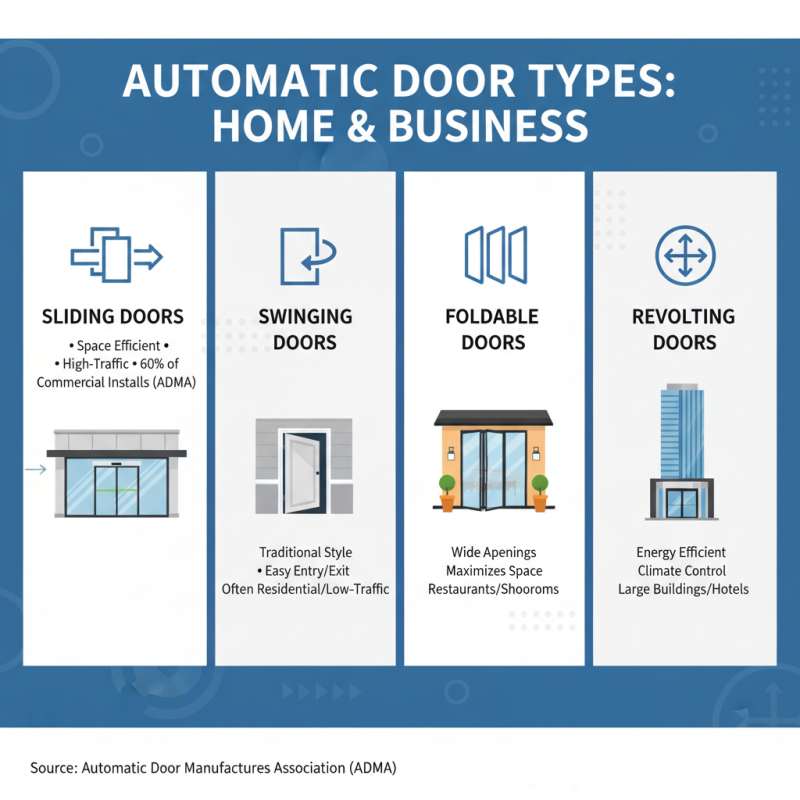
When considering automatic doors for your home or business, it’s essential to understand the various types available on the market, each designed to cater to specific needs and environments. The most common types include sliding doors, swinging doors, foldable doors, and revolving doors. According to the Automatic Door Manufacturers Association (ADMA), sliding doors account for about 60% of the installations in commercial settings due to their space efficiency and ease of access, making them ideal for high-traffic areas.
Tips: Before making a selection, assess the space where the door will be installed. For narrower openings, sliding doors are a space-saving solution, while swinging doors may provide a more traditional appearance for residential settings. Additionally, the installation of automatic doors can significantly enhance accessibility, complying with ADA requirements, and improving foot traffic flow.
Another consideration is the operational mechanism; you can choose between sensor-activated doors, which open automatically when someone approaches, and push-button doors, which require manual operation. Research shows that sensor-activated doors not only increase efficiency but can reduce energy costs by maintaining climate control. For businesses looking to enhance customer experience, choosing the right automatic door type can be a critical decision that influences both accessibility and overall appeal.
Key Factors to Consider When Choosing Automatic Doors for Your Space
When selecting an automatic door for your home or business, there are several key factors to consider to ensure you make the right choice for your specific needs. First, assess the traffic flow in the area where the door will be installed. High-traffic areas may require more durable and reliable systems, while lower-traffic zones could allow for simpler, less robust options. Understanding the volume and type of foot traffic will help you determine the right door system to optimize functionality and convenience.
Another crucial factor is the design and aesthetics of the automatic door. The doorway should complement the overall architecture of your building while providing a welcoming entrance. Consider materials, colors, and finishes that align with your interior design. Additionally, if accessibility is a priority, ensure the door adheres to ADA compliance, so it accommodates individuals with disabilities.
Tips: Always seek professional advice when selecting an automatic door; an expert can help you navigate the options based on your space's specific requirements. Additionally, prioritize energy efficiency features that can contribute to lower utility costs and a smaller environmental footprint. Lastly, keep maintenance requirements in mind—regular upkeep is vital to prolong the life of your automatic door and maintain its functionality.
Evaluating the Safety Features of Automatic Doors
When choosing an automatic door for your home or business, evaluating the safety features is of paramount importance. Automatic doors can enhance accessibility and convenience, but without the right safety measures, they may pose risks to users. Look for doors equipped with sensors that detect the presence of individuals or obstacles, ensuring that the door only operates when safe to do so. These sensors can prevent accidents, such as door closures on people or pets who are passing through.
Additionally, consider the inclusion of emergency stop mechanisms and safety edges. Emergency stops allow users to halt the door’s operation instantly, while safety edges are designed to reverse the door's movement if resistance is detected, providing an important safety net. Another vital feature to explore is the integration of safety protocols that comply with relevant building codes and regulations. These protocols not only protect users but also help in creating a safer environment in commercial settings where foot traffic is high. By prioritizing these safety features, you can ensure that your automatic door system is both functional and secure.
Assessing Energy Efficiency and Cost Considerations
When selecting an automatic door for your home or business, energy efficiency is a crucial factor to consider. Automatic doors, particularly those equipped with sensors, can help minimize energy loss by ensuring that doors only open when necessary, reducing drafts and maintaining internal temperature. It's essential to look for doors that are well-insulated and designed to minimize air leakage, as this can lead to significant savings on heating and cooling costs over time. Additionally, some models may include features such as automatic closing mechanisms that enhance insulation, providing added energy efficiency.
Cost considerations play a vital role in the decision-making process as well. The initial investment in an automatic door may be higher than traditional doors; however, it's essential to analyze the long-term savings generated through reduced energy consumption and maintenance costs. Evaluate the overall lifecycle costs, which include installation, energy usage, and potential repairs. Furthermore, some energy-efficient models may qualify for rebates or tax incentives, making them more financially appealing. By weighing these factors carefully, you can make an informed choice that balances upfront costs with long-term benefits.
Installation and Maintenance Tips for Automatic Doors
When selecting the right automatic door for your home or business, proper installation and maintenance are crucial for ensuring long-term functionality and safety. According to research by the Door & Access Systems Manufacturers Association (DASMA), nearly 30% of automatic door malfunctions can be attributed to improper installation. It is essential to engage experienced professionals who adhere to industry standards and manufacturer guidelines to ensure that the door operates efficiently and safely. During installation, factors such as the door's location, traffic volume, and user accessibility should be taken into account for optimal performance.
Maintaining your automatic door is equally important, with industry studies indicating that regular upkeep can extend the door's lifespan by up to 50%. Routine inspections should include checking for wear and tear on mechanical components, ensuring sensors are functioning correctly, and verifying that the door closes and opens smoothly. According to the American Association of Automatic Door Manufacturers (AAADM), issues such as misalignment or reduced sensor sensitivity are often preventable with regular maintenance. Creating a maintenance schedule and training staff on basic troubleshooting can greatly minimize downtime and repair costs, ensuring that your automatic door remains a reliable entry point for customers and visitors.
Automatic Door Types and Their Popularity