How to Choose the Best Automatic Door for Your Home or Business?
Choosing the right automatic door for your home or business is a significant decision. The global automatic door market is projected to reach $6.6 billion by 2027, driven by a rising focus on accessibility and security. According to industry expert John Smith, “Selecting the right automatic door is crucial for aesthetics, safety, and functionality.” This underscores the importance of making an informed choice.
Many factors come into play when selecting an automatic door. Each type serves different needs and environments. For instance, sliding doors offer easy access in busy areas, while swing doors may enhance elegance in residential settings. Both require careful consideration of materials and technology.
As you navigate through options, reflect on your specific needs. Do you prioritize energy efficiency, durability, or aesthetics? It's easy to overlook crucial details, leading to potential regrets later. Remember, an automatic door not only serves a functional purpose but also impacts the overall ambiance of your space. Taking the time to research and consult experts can lead to a better outcome.
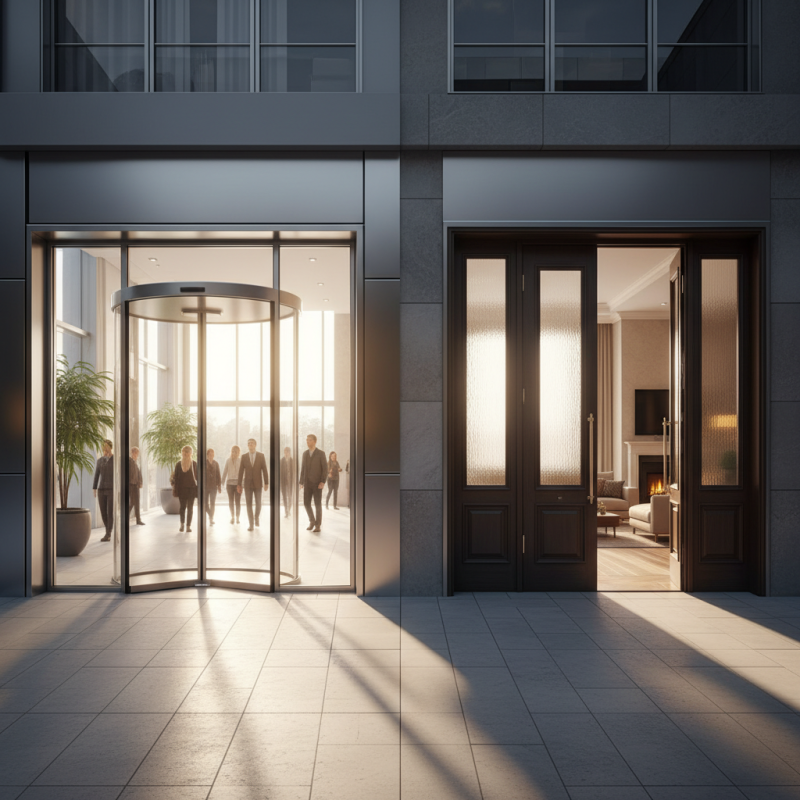
Understanding the Types of Automatic Doors Available for Residential and Commercial Use
When looking for the right automatic door for your home or business, it helps to know the types available. Automatic doors can enhance accessibility and convenience. They are increasingly popular in both residential and commercial settings.
Sliding doors are a common choice. They glide open and closed smoothly, making them space-efficient. These doors work well in tighter environments, like small shops or homes with limited entry space. Swinging doors are another option; they open outwards or inwards. This design is classic but may require more room to operate, which is a consideration for smaller areas.
Then there are folding doors. These can be a stylish addition. They open up large spaces effortlessly. However, not everyone prefers their look. Lastly, revolving doors stand out in busy places, offering a unique entrance. They help control the airflow and are impressive. Yet, some find them confusing. Each type has its strengths and weaknesses, so it’s worth considering your specific needs carefully.
Types of Automatic Doors Available for Residential and Commercial Use
This chart represents the different types of automatic doors commonly used in residential and commercial settings, showcasing their respective popularity based on a survey of industry professionals.
Key Features to Consider When Selecting an Automatic Door
When selecting an automatic door for your home or business, key features are essential. Consider the type of door that fits your needs. Sliding, swinging, or folding doors each offer unique benefits. Sliding doors are great for tight spaces. They save room and allow for easy access. Swinging doors can create a more traditional look. Think about the entrance’s traffic flow. Heavy pedestrian traffic might need a wider door.
Next, focus on the materials used. Aluminum and glass are popular choices, but durability matters. Look for weather-resistant options if the door is outside. Safety features are crucial as well. Motion sensors help prevent accidents. Soft-close mechanisms can protect both users and the door. Also, energy efficiency shouldn’t be overlooked. An automatic door with good insulation can lower energy costs.
Don’t forget about the installation and maintenance process. Some doors require specific setups, which can complicate things. Regular maintenance is a must for optimum performance. Choose a design that does not clash with your existing décor. It’s vital to ensure the door aligns with your style. Sometimes, a well-crafted door can still fail to impress if it doesn’t match. Reflect on your specific needs and make a choice that fits your lifestyle.
How to Choose the Best Automatic Door for Your Home or Business? - Key Features to Consider When Selecting an Automatic Door
| Feature |
Description |
Importance Level |
| Type of Automatic Door |
Sliding, swinging, folding, and revolving doors. |
High |
| Material |
Aluminum, glass, wood, or a combination. |
Medium |
| Safety Features |
Sensors, emergency stop buttons, and safety edges. |
High |
| Energy Efficiency |
Insulated doors and low power consumption systems. |
Medium |
| Maintenance Requirements |
Regular inspections and ease of repair. |
Medium |
| Installation Options |
Professional installation vs. DIY possibilities. |
High |
| Aesthetic Appeal |
Design compatibility with architectural style. |
Medium |
| Cost |
Initial purchase and installation costs. |
High |
Assessing Security and Safety Standards for Automatic Doors
When selecting an automatic door, it's vital to assess security and safety standards. Look for doors that comply with your local regulations. This guarantees that they meet necessary safety protocols. Poorly designed doors can pose risks. Always prioritize products that protect users.
Additionally, consider features like sensor sensitivity. Ensuring that sensors detect approaching individuals helps prevent accidents. Ideally, doors should operate seamlessly while keeping unauthorized access at bay. Practice evaluating how each door functions in various conditions.
Maintenance is another aspect often overlooked. Doors require regular checks to ensure they are safe and effective. Consider how easy it is to perform these checks. A door that is hard to maintain defeats its purpose. Balancing aesthetics with robust security measures can be challenging but is essential for both homes and businesses.
Evaluating Installation Requirements and Maintenance Needs
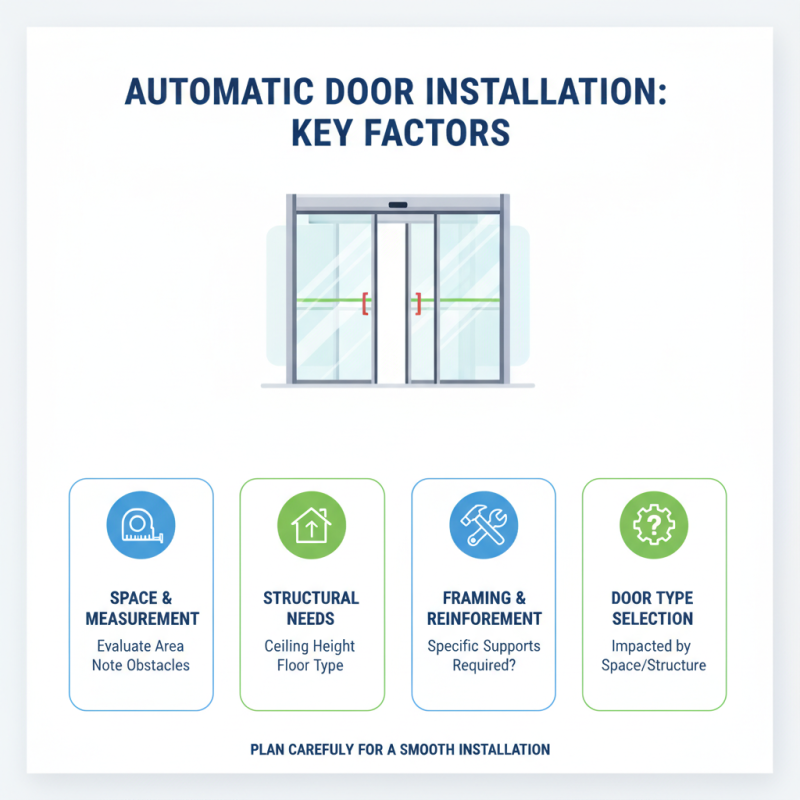
When considering automatic doors, it’s vital to evaluate installation requirements. The space you have can greatly impact the choice you make. Measure the area carefully. Sometimes, unexpected obstacles can complicate the process. Think about the ceiling height and floor type. Certain doors may need specific framing or reinforcement to work correctly.
Regular maintenance is another aspect to consider. Automatic doors require upkeep to function safely and effectively. Check the sensors and wiring periodically. Look for signs of wear, such as squeaks or slow openings. This routine check could prevent bigger issues down the line. Neglecting maintenance may lead to malfunctions. It’s better to address small problems early.
Additionally, consider the accessibility needs of your location. Different environments may have unique challenges. For instance, a business with high foot traffic may have very different needs than a private residence. It's essential to reflect on how many people will use the door and the frequency. Understanding these factors ensures that you choose a door that meets both functionality and durability.
Cost Considerations and Budgeting for Your Automatic Door Project
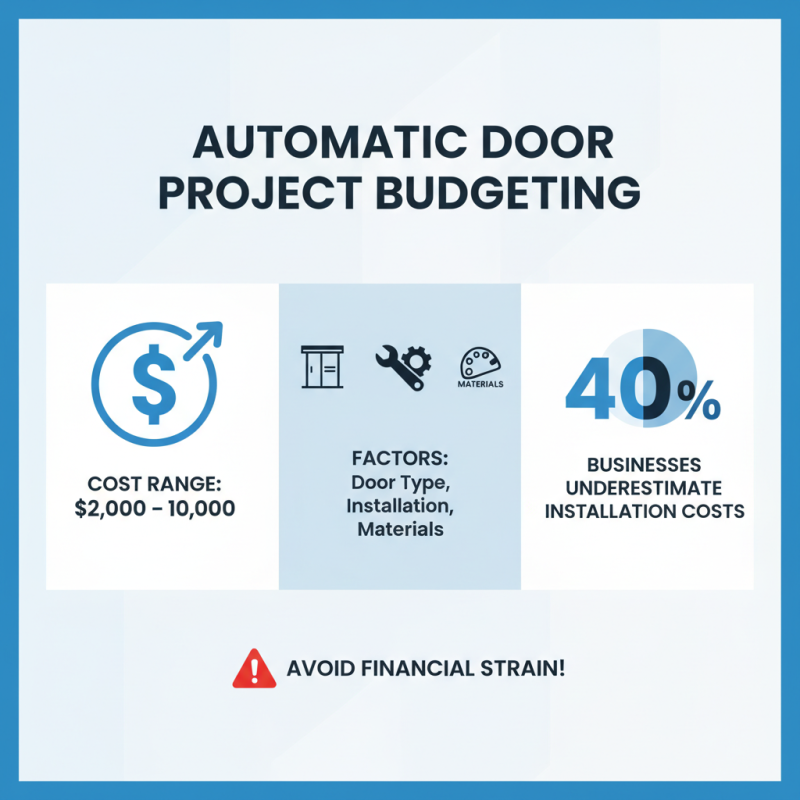
When planning an automatic door project, budgeting is crucial. The cost of automatic doors typically ranges from $2,000 to $10,000. Factors influencing the price include door type, installation complexity, and materials. According to industry reports, about 40% of businesses underestimate installation costs. This can lead to financial strain later on.
Selecting the right features also impacts overall expenses. For instance, advanced security systems add to the price but enhance safety. Basic models may be cheaper, yet they lack essential functionalities. Small businesses often prioritize affordability, but cutting corners can result in higher maintenance costs down the line.
Incorporating a contingency budget is wise. Industry experts suggest setting aside 15% of the total project cost for unexpected expenses. This approach minimizes financial stress during installation. However, many overlook this step, leading to budget overruns. The reality is that investing in quality now can save you money in the long term.