NJ & NYC Commercial & Residential Garage Door
Choosing China’s best Arm Ball Joint manufacturer requires more than comparing prices or factory photographs. The component connects the control arm to the steering knuckle, helping the suspension move while maintaining wheel control. Buyers should examine material traceability, machining consistency, heat treatment, sealing design, and test records. Small parts matter. A loose tolerance or damaged dust boot can shorten service life and create costly returns.
Market scale adds context, but it does not prove component demand. The International Organization of Motor Vehicle Manufacturers (OICA) reported global vehicle production of 93.5 million units in 2023. That figure signals the scale of the automotive supply chain, not a measured ball-joint market. It does, however, explain why repeatable production and dependable delivery matter to global buyers. Ask manufacturers for dimensional inspection results, load-test methods, corrosion-protection details, and evidence that production batches match approved samples. Check how they handle changes, complaints, and replacement parts. A polished catalogue is not enough.
There is no reliable shortcut to naming one supplier as “best” for every buyer. Vehicle applications, order volumes, validation requirements, and shipping needs differ. A lower quotation may conceal thinner documentation or a shorter warranty; it may not. Buyers should verify claims directly, compare like-for-like specifications, and assess samples before committing. Even careful audits have limits. Real-world performance still needs monitoring after delivery.
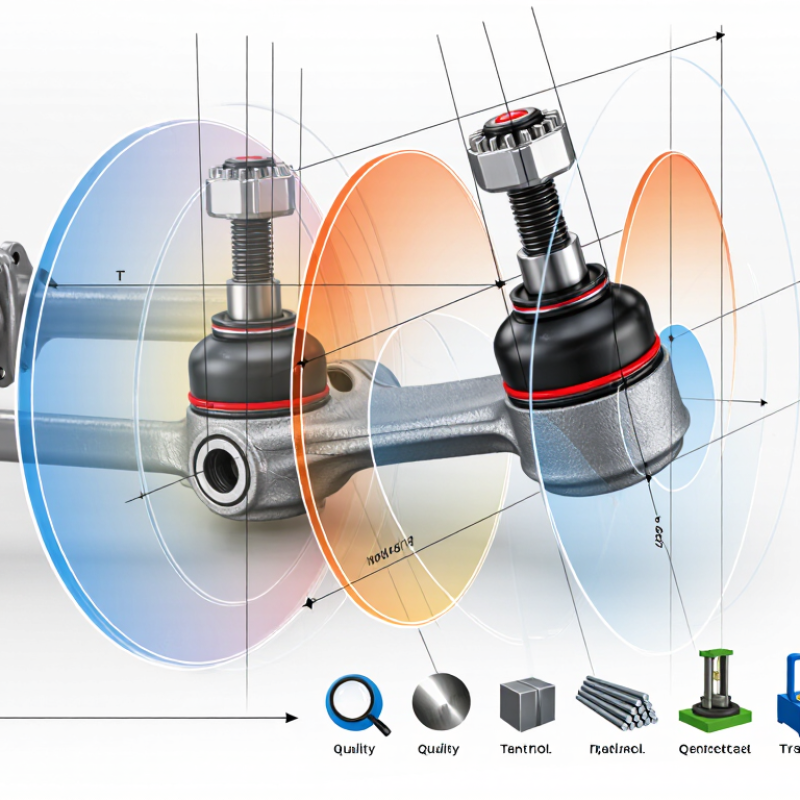
An arm ball joint is a compact pivot connecting a vehicle’s control arm to the steering knuckle. It lets the wheel move up and down over bumps while still turning left or right. Think of a metal ball seated inside a close-fitting socket. The ball stud can move at several angles, while the joint keeps the connected parts aligned.
Small pivot. Big workload.
As a vehicle travels over a rough road, the suspension pushes and pulls on the joint. During a turn, the same joint allows the steering knuckle to change direction without binding. A protective boot helps keep dirt and moisture away from the bearing surfaces. Some joints are sealed for their service life; others have a grease fitting. Design details vary by vehicle, so the correct inspection method matters.
Wear can develop gradually. A mechanic may check for looseness, a torn boot, or clicking and clunking sounds, but one symptom alone does not prove the joint has failed. Road conditions and driving habits also affect wear. The idea is simple; the forces are not. Even experienced technicians can find diagnosis less clear when several suspension parts are worn at once.
An arm ball joint connects a suspension control arm to the steering knuckle. It lets the wheel move up and down while still turning left or right. Think of a front wheel crossing a shallow pothole: the joint pivots as the suspension rises, helping the tire follow the road. Small part. Big job.
The joint also transfers forces between the wheel assembly and the control arm. Its design must match the vehicle’s suspension geometry, including the required pivot range and mounting dimensions. A poor fit can affect alignment or restrict movement. That is why buyers should check application data, dimensions, materials, and inspection procedures rather than relying on appearance alone. Details matter here.
In service, a technician may look for looseness, damaged seals, or unusual movement during inspection. A clunk over bumps can have several causes, so it does not prove the ball joint has failed. Diagnosis matters. For manufacturers, consistent machining and controlled assembly help produce joints that fit and articulate as intended. Still, even a well-made component depends on correct installation and maintenance. It is easy to treat this as a simple connector; that view overlooks the loads and motion it handles every mile.
Production usually begins with drawings that define the joint’s dimensions, movement range, and load requirements. Depending on the design, manufacturers may forge or machine the steel ball stud and housing. Forging shapes the metal under pressure; machining then refines contact surfaces and threads. Heat treatment can improve strength and wear resistance, but its results depend on controlled temperatures and repeatable checks.
The ball stud is fitted with a bearing liner, often made from an engineered polymer, and packed with suitable grease. A protective boot helps keep out water and road grit. Workers or automated equipment then assemble and secure the housing. Quality checks may include dimensional inspection, articulation testing, and load testing. A bright surface looks reassuring, but appearance alone cannot confirm durability. Test records and consistent inspection matter more. Processes differ by design, and a detail that seems minor can affect fit.
Tips: Ask for material specifications, inspection records, and sample test results. Check that the boot sits evenly and the stud moves smoothly, without looseness or binding. If a supplier cannot explain how it checks critical dimensions, pause and ask more questions. Even careful production has limits; real-world service conditions can reveal issues that factory tests miss.
Global buyers assess Chinese ball joint manufacturers through repeatable evidence, not catalogue claims. OICA’s 2023 production statistics report 93.5 million motor vehicles built worldwide, up 10% from 2022. This growing vehicle base makes stable supply important, but production volume alone says little about a supplier’s quality. Buyers should review process controls, inspection records, material certificates, and batch traceability.
Ask for dimensional results for the ball stud, housing, and taper, plus documented fatigue, corrosion, and articulation tests. Request sample parts from a normal production run, not only hand-selected prototypes. A factory visit can reveal practical details: calibrated gauges at inspection stations, clearly marked bins, and how rejected parts are contained. Check whether test methods and acceptance limits match the buyer’s drawing and application. Small differences matter.
Look beyond a certificate on the wall. Verify its scope, expiry, and connection to the actual production site. OICA’s figures describe vehicle output, not ball joint demand, so they should not be used as a market forecast. I would also question unusually perfect inspection summaries; real processes produce variation, and suppliers should explain how they handle it. That conversation can be revealing.
When sourcing arm ball joints from China, assess the factory process, not just the quotation. OICA reported 93.5 million motor vehicles produced worldwide in 2023, showing the scale of the parts supply chain. That figure does not prove any supplier’s quality. Ask how the joint’s housing, stud, liner, and dust boot are controlled during production. Request material certificates, heat-treatment records, dimensional inspection results, and durability-test reports for the exact part number and revision.
Check whether samples match your drawings and installation dimensions. Look for documented controls on stud hardness, articulation torque, pull-out strength, and boot sealing. Ask how production batches are traced and how nonconforming parts are handled. An ISO 9001 or IATF 16949 certificate can support a review, but it cannot replace an on-site audit or part-specific evidence. Paperwork can look perfect. It is not proof. Test reports should show methods, acceptance limits, and actual results.
Tips: Compare a pre-production sample with your drawing, then request test records from the same batch. Clarify packaging, inspection criteria, and change-notification procedures in writing. One detail is easy to miss: a boot may look intact yet seal poorly after repeated articulation. Verify it under relevant tests. Supplier selection is rarely tidy; even a strong audit leaves some uncertainty. Keep that in your risk assessment.
What to Check When Sourcing Arm Ball Joints from China
Use this checklist to compare suppliers. Each bar represents one verification area, not a score or market statistic. Confirm requirements against the vehicle application, agreed drawings, and applicable test specifications; product limits can vary by design.