NJ & NYC Commercial & Residential Garage Door
Choosing the right rubber dust boot manufacturer requires more than comparing catalog photographs or unit prices. These components protect ball joints, tie rods, steering links, and other moving parts from water, grit, and road debris. A poorly fitted boot may split early, allowing contamination to damage expensive assemblies.
This guide examines 10 Best rubber dust boot Manufacturers Worldwide through practical, industry-focused criteria. We consider material quality, molding precision, temperature resistance, chemical durability, dimensional consistency, and production capacity. We also review quality systems, testing methods, customization options, and supply reliability. Small details matter. A clean sealing lip, flexible bellows, and accurately placed mounting groove can determine service life in demanding conditions.
The manufacturers included here serve different markets, from automotive repair and aftermarket distribution to industrial equipment and specialized engineering. Some emphasize high-volume production, while others provide tailored compounds or low-volume development support. Their strengths are not identical, and that matters to buyers with different operating requirements.
Real-world performance can vary.
Laboratory data does not tell the whole story. Installation technique, lubricant selection, road exposure, and storage conditions also influence results. For that reason, this overview is intended as a practical starting point, not an absolute verdict. Buyers should confirm drawings, samples, compliance documents, and test results before placing major orders. A careful comparison can reduce premature failures and support more dependable equipment maintenance.
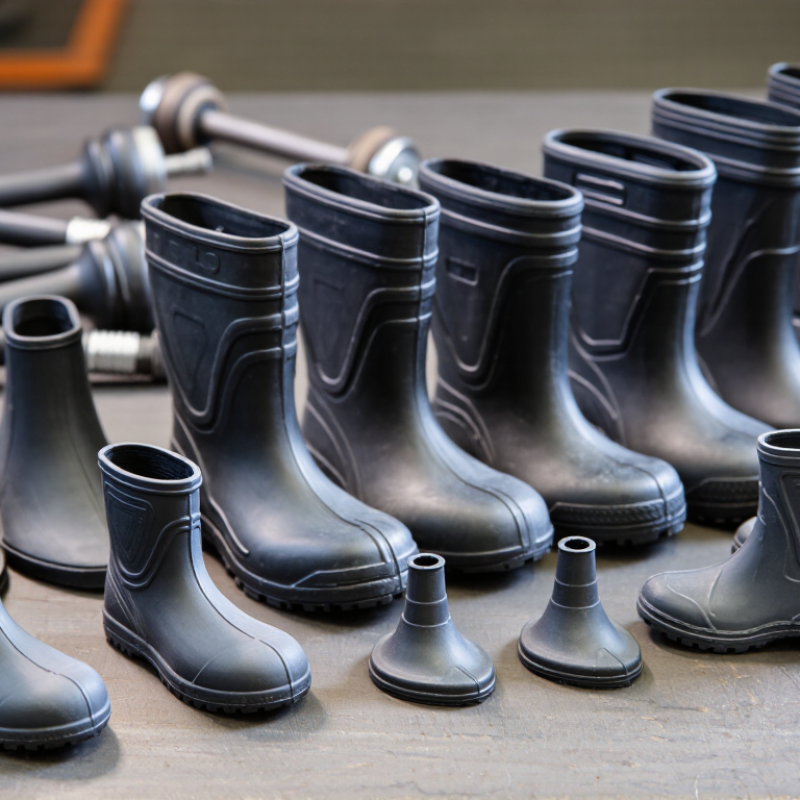
Rubber dust boots shield moving joints, shafts, and linkages from dust, water spray, grease, and road debris. Their flexible bellows profile also allows repeated compression, extension, and angular movement. A loose boot admits contamination. An overly tight boot may crack early.
Material selection depends on the working environment. Nitrile rubber suits oil exposure and moderate temperatures. EPDM performs better against weather, ozone, and water. Silicone handles wider temperature changes but may resist abrasion poorly. Fluoroelastomers offer strong chemical resistance, although their cost can be significant. The material choice should follow actual service conditions, not habit.
ISO 3302-1 provides dimensional tolerance classes for molded and extruded rubber products. The drawing should identify the required class, critical dimensions, and measurement conditions. M1 offers tighter control than M2, M3, or M4, but tighter tolerance may increase tooling and inspection demands. The standard addresses dimensions, not complete boot performance. It does not guarantee fatigue life, sealing pressure, or chemical compatibility. Manufacturers should inspect lip thickness, wall uniformity, mounting diameter, and bellows spacing. Small flash is common, yet excessive flash can affect assembly. A boot may meet dimensional limits and still fail during cycling. That is why practical validation matters. Temperature cycling, flex testing, and contamination checks often reveal weaknesses that calipers miss. Specifications are sometimes too vague. That remains a purchasing risk.
Choosing among the 10 best rubber dust boot manufacturers worldwide requires more than checking catalog photographs. ASTM D2000 is a practical starting point because it identifies rubber compounds by performance requirements. Request the complete callout, including type, class, oil resistance, heat resistance, and test conditions. A boot marked only “meets ASTM” tells you very little. Ask for recent laboratory reports. Independent verification is stronger than a polished datasheet. Still, paperwork can hide production variation.
Shore A hardness affects sealing, flexibility, and installation force. A harder boot may resist abrasion, yet it can fold poorly around a tight shaft. A softer compound seals small surface irregularities, but may stretch or tear under repeated movement. Measure hardness on finished parts, not only on a molded test slab. Use several samples from different batches. Temperature changes readings. Experienced evaluators also inspect flash, wall thickness, bellows symmetry, and clamping areas. Small molding defects often become visible after thousands of cycles.
Service life should be supported by flex cycling, heat aging, ozone exposure, and contamination tests that match the application. Ask how many cycles were completed before cracking, swelling, or permanent deformation appeared. Field records matter too: mileage, ambient temperature, lubricant type, and failure photographs reveal patterns laboratory tests may miss. Promises remain estimates. Installation errors, shaft misalignment, and abrasive dust can shorten life dramatically. Manufacturers with traceable batch records, clear tolerances, and responsive technical support deserve closer consideration. Not every test reflects reality. Review the gaps before approving a supplier.
Rubber dust boots protect shafts, joints, and seals from grit, water, and road debris. Their molding method strongly affects fit, durability, and production consistency.
Compression molding uses pre-measured rubber placed inside a heated cavity. It suits medium volumes and larger boots with simple geometries. Tooling costs are often lower, but cycle times can be longer.
Injection molding pushes heated rubber into a closed mold under controlled pressure. This method supports detailed ribs, thin walls, and repeatable dimensions. It works well for high-volume production. However, material flow, venting, and mold temperature require close monitoring. Small errors may create air traps or uneven wall thickness. Details matter.
Transfer molding places rubber into a chamber before pressure moves it into the cavity. It can produce cleaner edges and more complex shapes than basic compression molding. This process is useful when the boot includes reinforced sections or precise sealing lips. It may also reduce flash when the tooling is properly maintained. Not always.
When evaluating manufacturers, request evidence of hardness testing, compression-set results, and dimensional inspections. Temperature cycling can reveal cracking that normal visual checks miss. Ask how each supplier controls batch traceability and mold wear. Experienced producers usually explain their process limits instead of promising universal performance. A careful review should compare rubber formulation, expected service temperature, boot geometry, and annual volume. No process is flawless, and a cheaper mold can create higher costs through rejects, leakage, or early replacement.
The global shortlist features 10 leading rubber dust boot manufacturers selected for material expertise, production consistency, and international supply experience. These manufacturers serve steering systems, suspension joints, drive shafts, and industrial linkages. Their products commonly use rubber compounds designed to resist dust, water, grease, ozone, and repeated flexing.
Selection involved more than catalog research. Technical checks included dimensional stability, tear strength, compression behavior, and temperature resistance. Experienced buyers should request samples before approving large orders. A boot may fit perfectly on paper yet fail around a sharp groove. Manufacturing capabilities also matter. Strong suppliers can control wall thickness, vent placement, curing time, and batch traceability. Some shortlisted companies operate advanced molding lines, while others compete through flexible tooling and smaller production runs.
The shortlist spans Europe, Asia, and North America. Several manufacturers support custom compounds and molded markings. Others focus on standard replacement sizes with shorter lead times. Factory audits can reveal practical details, such as clean trimming stations, protected storage, and consistent inspection records. No shortlist is flawless. Supplier rankings can shift with tooling quality, raw material changes, or delivery performance. Buyers should compare salt-spray results, aging data, and real installation feedback rather than trust polished specifications alone. A sample that survives a test bench may still crack after months beside a hot, vibrating engine.
| Rank | Anonymous Manufacturer Profile | Primary Production Region | Core Dust Boot Products | Common Elastomer Options | Manufacturing Methods | Typical End-Use Sectors | Customization Capability | Quality and Documentation Practices |
|---|---|---|---|---|---|---|---|---|
| 1 | Profile 01 | East Asia | Bellows boots, accordion boots, steering-rack boots and constant-velocity joint boots. | CR NBR EPDM FKM | Compression molding, transfer molding and automated trimming. | Automotive, agricultural machinery, construction equipment and industrial motion systems. | Tooling for customer drawings, multiple diameters, wall thicknesses, ribs and mounting interfaces. | Material certificates, dimensional inspection, batch traceability and routine visual testing are commonly available. |
| 2 | Profile 02 | Central Europe | High-precision protective boots for shafts, joints, linkages and linear-motion components. | NBR HNBR TPV FKM | Injection molding, rubber-to-metal bonding and controlled post-curing. | Passenger vehicles, commercial vehicles, robotics, factory automation and hydraulics. | Engineering support for sealing lips, clamps, grooves, tolerances and application-specific compounds. | Inspection plans, process records, material identification and test reports for tensile and hardness results. |
| 3 | Profile 03 | Southeast Asia | General-purpose dust covers, flexible bellows, universal boots and replacement protective sleeves. | NR SBR NBR EPDM | Compression molding, injection molding and manual finishing for low- to medium-volume orders. | Motorcycles, agricultural equipment, small machinery, automotive aftermarket and electrical equipment. | Custom colors, logo-free private-label production, alternative compounds and prototype tooling. | Incoming-material checks, sample approval, production inspection and packaging verification are typically used. |
| 4 | Profile 04 | North America | Heavy-duty dust boots for off-road vehicles, industrial joints and high-load mechanical assemblies. | NBR CR EPDM Polyurethane | Compression molding, injection molding, die cutting and molded rubber-to-metal components. | Mining, off-road vehicles, material handling, industrial automation and defense-related equipment. | Application review, finite-element design support, custom tooling and performance validation. | Dimensional reports, compound specifications, lot control and documented nonconformance procedures are common. |
| 5 | Profile 05 | Western Europe | Compact precision boots for automotive driveline, steering, suspension and sensor protection. | HNBR CR EPDM FKM | High-speed injection molding, automated inspection and assembly with clamps or retainers. | Automotive systems, electric vehicles, transport equipment and precision machinery. | Designed-to-print parts, tight dimensional control, low-friction surfaces and temperature-specific compounds. | Statistical process monitoring, laboratory compound testing, traceability and customer-specific inspection plans. |
| 6 | Profile 06 | South Asia | Industrial bellows, universal dust boots, hydraulic protective covers and agricultural replacement parts. | NR SBR NBR EPDM | Compression molding, transfer molding and small-batch hand finishing. | Agricultural machinery, pumps, hydraulic equipment, automotive service and general engineering. | Small and medium production runs, sample-based development, size modifications and compound selection. | Basic dimensional checks, hardness testing, visual inspection and shipment-level documentation are commonly provided. |
| 7 | Profile 07 | Eastern Europe | Rubber bellows and protective boots for industrial drives, rail equipment and mechanical linkages. | CR NBR EPDM Silicone | Compression molding, extrusion-assisted forming and rubber-to-metal vulcanization. | Rail transportation, industrial machinery, energy equipment and commercial vehicles. | Long-length bellows, reinforced designs, temperature-resistant materials and customized mounting features. | Product drawings, inspection records, material declarations and batch identification are generally available. |
| 8 | Profile 08 | East Asia | Cost-efficient automotive replacement boots, CV joint boots and steering-rack covers. | TPE TPV NBR CR | Injection molding, thermoplastic elastomer processing and automated packing. | Automotive aftermarket, motorcycles, light commercial vehicles and power equipment. | Catalog-compatible dimensions, replacement tooling, color matching and packaging customization. | Incoming inspection, first-article approval, routine dimensional checks and packaging control are commonly applied. |
| 9 | Profile 09 | Latin America | Replacement dust boots, suspension boots, universal covers and agricultural machinery bellows. | NR SBR NBR EPDM | Compression molding, manual trimming and flexible low-volume production processes. | Automotive repair, agricultural equipment, transport maintenance and general industrial use. | Regional replacement dimensions, custom molds, alternate hardness levels and small-batch orders. | Visual inspection, hardness checks, dimensional sampling and basic material documentation are typically offered. |
| 10 | Profile 10 | Middle East and North Africa | Heat-resistant and dust-resistant protective boots for vehicles, pumps and industrial equipment. | NBR EPDM CR FKM | Compression molding, transfer molding and assembly of clamps or retaining rings. | Commercial vehicles, oil and gas support equipment, pumps, construction machinery and utilities. | Hot-climate compound selection, reinforced walls, nonstandard dimensions and application-specific packaging. | Material certificates, dimensional checks, heat-aging data and shipment documentation may be supplied by project. |
Note: The profiles are anonymized and represent common manufacturing capabilities, material choices and quality practices found across the global rubber dust boot industry.
Choosing a rubber dust boot manufacturer requires more than comparing unit prices. Material selection often determines service life. NBR performs well around oils and hydraulic fluids, while EPDM suits water, weather, and brake fluid exposure. Silicone tolerates wider temperatures, but it may tear more easily under sharp movement. FKM offers strong chemical resistance and costs more.
Certification evidence matters. Reliable manufacturers should provide ISO 9001 records, material traceability, and batch inspection reports. Automotive suppliers may also follow IATF 16949 systems. For international markets, ask for relevant RoHS or REACH declarations. These documents support purchasing decisions, but they do not replace physical testing.
I usually check hardness, compression set, tensile strength, and ozone resistance. Small cracks often appear only after cycling.
Market experience also reveals practical differences. A supplier serving agricultural equipment may understand mud, dust, and long outdoor exposure. An industrial supplier may focus on heat, vibration, and repeated compression. Customization can include wall thickness, sealing ribs, vent holes, color, hardness, and installation tooling.
Good engineers review the mating shaft and movement angle before approving a mold. That step prevents expensive revisions. Not every factory handles tight tolerances well. Some samples look excellent but fail after assembly.
Ask for pilot batches, dimensional reports, and production references. Pricing still matters, though the cheapest quotation can hide unstable materials, poor packaging, or limited technical support.