NJ & NYC Commercial & Residential Garage Door
Insulation Parts are small components with large consequences. A sleeve, spacer, gasket, or molded barrier can affect heat loss, electrical isolation, equipment life, and maintenance needs. Yet “best supplier” has no single definition. The right choice depends on the application, material, operating conditions, and required tolerances.
The scale of the efficiency challenge is clear. UNEP and the Global Alliance for Buildings and Construction reported that buildings and construction accounted for 34% of global energy demand and 37% of energy- and process-related carbon dioxide emissions in 2022. Their 2023 Global Status Report makes energy performance an important consideration for building projects. It does not rank Chinese component manufacturers, however. Supplier comparisons still require product-level evidence.
This guide examines Chinese suppliers through practical criteria: material specifications, manufacturing capability, quality controls, customization, and communication. Look for current test reports, traceable materials, clear dimensional drawings, and samples that match production conditions. Details matter. A polished catalog is not proof of consistent output, and online supplier listings can be incomplete. That is worth remembering. The strongest shortlist is built by checking documents, asking specific technical questions, and confirming that a supplier can meet the intended use. The sections ahead help buyers assess those claims without treating price or marketing language as a substitute for evidence.
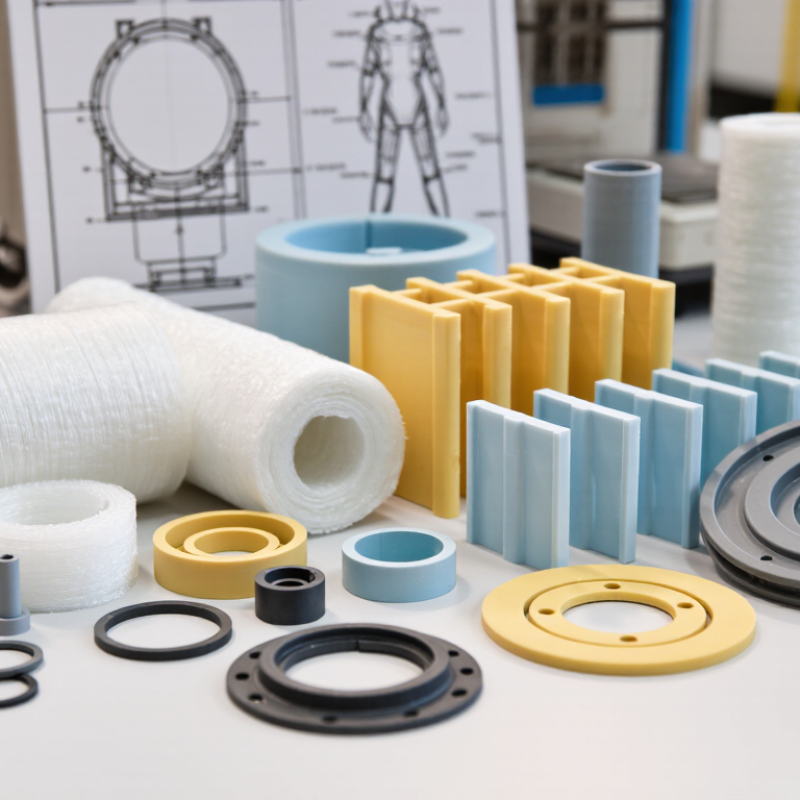
Insulation parts are nonconductive components that separate energized conductors from other parts of an electrical assembly. They may also support wires, limit heat transfer, or help maintain clearances. Common forms include sheets, tubes, washers, barriers, and molded spacers. Fit matters.
These parts appear in motors, transformers, switchgear, and battery equipment. Inside a motor, a thin insulating sheet can separate windings from the metal housing. In a transformer, formed barriers help keep conductors apart, even when space is tight. Materials such as mica, fiberglass laminate, and engineered plastics suit different temperatures, loads, and moisture conditions. A material name alone is not enough.
Choosing parts calls for checking drawings, tolerances, operating temperature, and exposure to vibration or oil. Ask suppliers for material specifications and relevant test information, then inspect samples for clean edges and consistent thickness. Small details matter. A washer that is slightly too wide may interfere with assembly; one that is too thin may not provide the intended separation. Datasheets are useful, but they cannot describe every real installation. A careful fit check may reveal what the drawing missed.
China’s insulation-parts supply market is a layered network, not one factory category. Material producers supply items such as electrical laminates, mica products, and insulation films. Converters then cut, press, mold, or machine these materials into parts for motors, transformers, and switchgear. Component makers and distributors connect those parts to equipment manufacturers. The chain is layered.
Demand follows wider manufacturing activity, though this does not measure insulation parts alone. The National Bureau of Statistics of China reported that manufacturing value added grew 5.0% in 2023 in its Statistical Communiqué. That growth gives useful context, but it cannot tell buyers which supplier has consistent tolerances or reliable batch records. A neat supply-chain map can mislead: some firms combine material production and processing, while others depend on outside mills. Not always obvious.
Tips: Ask for material traceability, dielectric test results, thermal ratings, and dimensional tolerances for the exact part. Compare samples with production batches, not just catalog sheets. A low quotation may omit testing or tooling details. Check those assumptions early.
Choose suppliers by measurable performance, not polished catalog photos. UNEP’s 2023 Global Status Report for Buildings and Construction estimates that buildings used 34% of global energy and produced 37% of energy- and process-related CO₂ emissions in 2022. Reliable insulation components therefore matter. Request test reports for thermal conductivity, moisture absorption, density, and dimensional tolerance. Check that the reported methods match your application, and verify that reports cover the actual material grade. Details matter.
Assess production controls as carefully as product data. Ask how incoming materials are checked, how batches are traced, and how out-of-spec parts are handled. A useful sample review includes caliper measurements, edge condition, packaging, and performance after exposure to expected temperature and humidity. Check whether the supplier can maintain consistent output across repeat orders, not just a small trial batch. No checklist catches every surprise; factory records and clear communication still need human judgment.
Chinese insulation-parts suppliers are best compared by material specialty and manufacturing capability, not catalog size. Some produce ceramic-fiber boards, ropes, modules, and custom-cut furnace seals. Others focus on mica sheets, glass-fiber sleeves, mineral-wool pipe sections, or molded thermal shields. These are different jobs.
The IEA’s 2023 Global Status Report for Buildings and Construction estimates that buildings used about 30% of global final energy and produced 26% of energy-related emissions in 2022. That makes verified thermal performance important. Ask suppliers for conductivity data at operating temperatures, maximum-use temperature, density, and dimensional tolerances. Room-temperature figures alone may hide performance gaps. Small details matter.
Ceramic-fiber components suit high-temperature linings and seals; mica parts serve electrical insulation applications. Glass-fiber textiles are common in removable blankets and sleeves, while mineral-wool sections fit pipe insulation. Request batch records and a sample for inspection. I would not rank suppliers by online catalog breadth alone; it is an imperfect shortcut. Check whether test reports cover the exact product grade and working conditions you need.
A reliable supplier should understand where each insulation part will be used. Ask about operating temperature, voltage, moisture exposure, and mechanical stress. These details shape material selection and production tolerances. A supplier who asks precise questions may be a better fit than one who quotes instantly. Fast answers are not always good answers.
Compare technical documents, sample quality, and inspection methods. Request material specifications and test reports that match the parts you plan to order. Check whether samples have clean edges, consistent thickness, and accurate dimensions. Details matter. If possible, test samples under conditions close to your actual application. A polished sample alone cannot show how a full production run will perform. I would not rely on a catalog photo, even when it looks convincing.
Production capacity and communication deserve equal attention. Ask how the supplier handles rejected parts, changes to drawings, and delays in raw materials. Request a clear production timeline, including sample approval and final inspection. A lower price can be tempting, but unclear tolerances may create extra work later. I have seen buyers focus too heavily on unit cost; it is an easy mistake to make. Compare quotations line by line, and confirm what packaging and quality checks are included before placing an order.