What is an Automatic Door and How Does It Work?
Automatic doors have become a staple in various industries, enhancing convenience and safety. According to a report by Grand View Research, the global automatic door market is expected to reach $28.4 billion by 2025. This growth reflects the increasing demand for efficient access solutions in commercial and residential spaces. Industry expert John Simmons noted, “Automatic doors not only improve accessibility but also contribute to energy efficiency.”
Incorporating advanced sensors and control systems, automatic doors operate smoothly, ensuring seamless entry and exit. These systems reduce the need for physical contact, which is especially crucial in today’s health-conscious environment. Despite the impressive technology behind automatic doors, challenges remain. Proper installation and maintenance are vital for optimal performance. Neglecting these aspects can lead to malfunctions, posing safety risks.
The versatility of automatic doors is evident, finding applications in retail stores, hospitals, and airports. Each setting demands different functionalities. Yet, the industry must continuously adapt to changing needs and technological advancements. This ongoing evolution calls for careful consideration and continuous improvement. Embracing these changes will ultimately enhance the user experience with automatic doors.

Definition and Overview of Automatic Doors
Automatic doors are an essential feature in modern architecture. They offer convenience and accessibility, making entry and exit smoother. These doors operate without the need for manual effort. Their primary purpose is to provide easy access for everyone, including those with disabilities.
The mechanism behind automatic doors is fascinating. They typically use sensors to detect motion. When someone approaches, the sensors trigger the door to open. This is often accomplished through infrared beams or pressure mats. Sometimes, malfunctioning sensors can cause frustration. A door may fail to open when it should. It’s essential to regularly maintain the system. Even a small issue can lead to inconvenience.
Automatic doors come in various styles, from sliding to revolving. Each design serves specific environments, like malls or hospitals. Their effectiveness relies on proper installation and calibration. However, they may not always be foolproof. Power failures or sensor glitches can leave doors stuck. Understanding how these systems work can help users manage expectations.
Usage of Automatic Doors by Type in Various Applications
Types of Automatic Doors and Their Applications
Automatic doors are increasingly popular across various sectors. They provide ease of access and enhance the consumer experience. Different types of automatic doors include sliding, swinging, and foldable. Each type offers unique benefits tailored to specific environments.
Sliding doors are widely used in retail settings. According to a report by Research and Markets, the automatic door market is projected to grow by 6.5% annually through 2025. This growth indicates an increasing preference for convenience among consumers. Swinging doors are often found in hospitals and office buildings, facilitating smooth entry and exit. They respond quickly to approaching individuals, enhancing traffic flow.
Foldable automatic doors are ideal for spaces with limited entry points. This system allows for wider openings, accommodating larger groups. Though these doors are functional, maintenance can be challenging. Regular servicing is essential to ensure their reliability. A study by the International Door Association emphasized that proper maintenance can prevent accidents and ensure smooth operations, highlighting the need for ongoing assessment of door systems in various facilities.
Key Components and Mechanisms of Automatic Doors
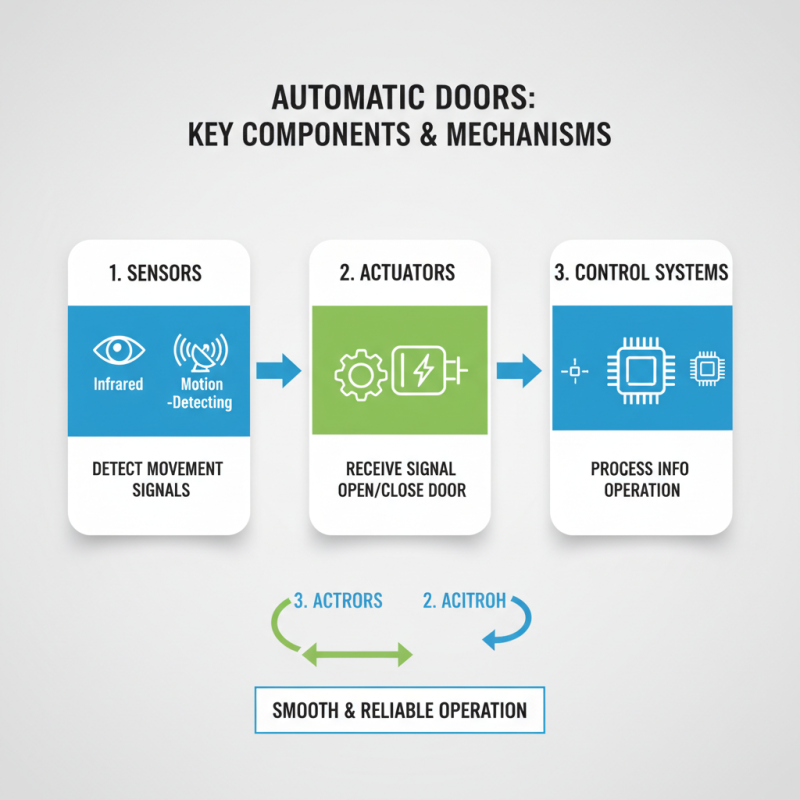
Automatic doors are more than just conveniences; they rely on key components that ensure smooth operation. These doors typically include sensors, actuators, and control systems. Sensors detect movement and signals, notifying the actuator to open or close. Common sensor types include infrared and motion-detecting sensors, which offer versatility in various environments.
Actuators are crucial, converting signals into mechanical action. There are various types, such as electric and hydraulic actuators. Industry reports suggest that automatic doors reduce energy costs significantly—up to 30%—by minimizing heat loss in commercial buildings. Control systems, often linked to various sensors, adjust door functions based on real-time data. This seamless integration enhances reliability but can sometimes lead to malfunctions, sparking debates about maintenance practices.
Despite advances, challenges exist. Sensor misalignments or actuator wear can hinder performance, resulting in inconvenient operation. Regular evaluations are necessary for consistent reliability. Industry professionals often recommend routine inspections to catch issues early. While automatic doors improve accessibility and efficiency, ongoing attention to performance is vital for optimal functionality.
How Sensors Initiate Automatic Door Operation
Automatic doors enhance accessibility in many settings. They provide convenience and efficiency for users. These doors mainly operate using sensors, which are crucial for their functionality. The sensors detect movement or pressure, triggering the door to open or close.
Infrared sensors are common in automatic doors. They emit beams of light that detect when a person approaches. When someone steps into the sensor's path, it interrupts the beam. The door responds swiftly, helping to prevent collisions. In contrast, pressure sensors rely on weight. They activate when someone steps on a mat placed at the entrance.
While automatic doors are efficient, they can sometimes malfunction. Blockage in the sensor path or misalignment can lead to failures. Regular maintenance is essential to ensure reliability. Observing how these systems work can improve user experience. A deeper understanding of sensor technology can spark innovative solutions. More research is needed to enhance their reliability in unpredictable environments. Proper education about these systems can empower users to engage with them safely.
Maintenance and Safety Considerations for Automatic Doors
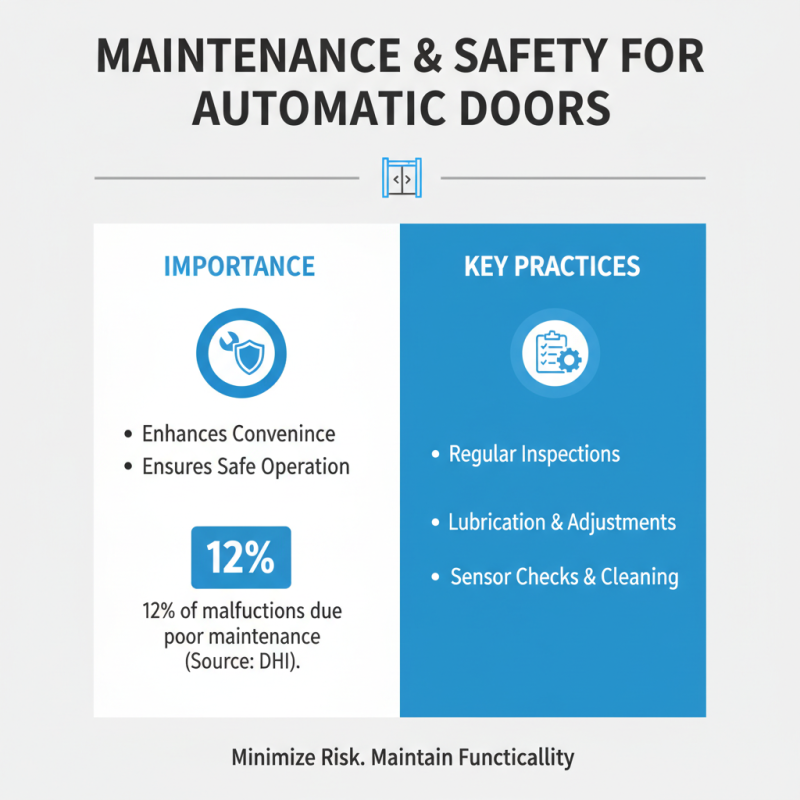
Automatic doors enhance convenience in various settings, but they require regular maintenance for safe operation. According to a report by the Door and Hardware Institute, nearly 12% of automatic door malfunctions are linked to poor maintenance. Keeping up with regular checks ensures smooth functionality and minimizes risk.
Safety is a prime concern for automatic doors. An accident caused by a malfunctioning door can harm individuals and lead to significant liability issues. The American Society for Testing and Materials outlines safety requirements for automatic doors, emphasizing regular inspections and adjustments. Issues such as sensor malfunction or alignment can pose serious dangers.
Proper maintenance includes lubricating moving parts and testing safety sensors monthly. It’s essential to involve certified technicians for comprehensive checks. Neglecting maintenance not only affects functionality but also poses safety risks. Regular data collection on door performance can provide insights into potential issues before they become critical. Stability, reliability, and safety should be prioritized in maintaining automatic doors.