2026 Best Hollow Door Types for Global Buyers?

2026 Best Hollow Door Types for Global Buyers?

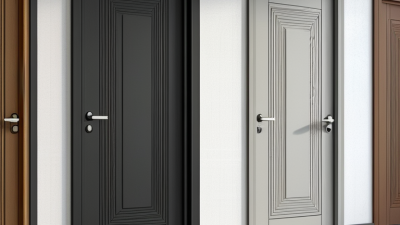
Choosing a hollow door in 2026 is no longer a simple price comparison. Global buyers now assess core structure, surface durability, moisture resistance, acoustic performance, and installation quality. A lightweight honeycomb-core door may suit bedrooms and offices. A tubular-core model can offer better stiffness and sound control. For humid corridors, engineered skins and sealed edges deserve close attention.

Gary Katz, a respected door and hardware educator, offers a practical warning: “A door is only as good as its installation.” That advice remains highly relevant. Even a well-made hollow door can drag, rattle, or leave uneven gaps when the frame is poorly aligned. Check hinge reinforcement, lock-block placement, face thickness, and the manufacturer’s permitted trimming limits. Small details matter.

Real projects also expose uncomfortable choices. A cheaper door may reduce shipping costs, yet weak edge sealing can create problems after repeated cleaning. A heavier construction may feel premium, but it can demand stronger hinges and a more accurate frame. Buyers should compare tested performance, not attractive samples alone. Verify applicable fire, safety, environmental, and building requirements in the destination market. Product claims should be supported by current technical documents.

There is no universal best type.

This guide examines the leading hollow door options for commercial, residential, hospitality, and interior renovation projects. It considers climate, handling, maintenance, customization, supply reliability, and long-term value. Some recommendations may challenge familiar purchasing habits. That is useful. Better decisions often begin with questioning the obvious choice.
2026 Best Hollow Door Types for Global Buyers?

Hollow Door Basics: Core Materials, ASTM Standards, and 2026 Buyer Criteria

2026 Best Hollow Door Types for Global Buyers?

Hollow doors usually contain paper honeycomb, cardboard lattice, polystyrene, or polyurethane foam. Paper honeycomb offers low weight and lower cost. Foam cores improve insulation, but they may increase price and shipping volume. Mineral-filled cores provide stronger fire and acoustic performance, although they are no longer truly hollow. Grand View Research estimated the global doors market at about USD 140 billion in 2023. That figure covers many door types, not hollow doors alone. Still, it shows why material selection matters across renovation and new-build markets.

Buyers should check ASTM E283 for air leakage, ASTM E330 for structural performance, and ASTM E90 with ASTM E413 for laboratory sound ratings. ASTM standards support comparison, but they do not replace local building-code approval. A 30-minute fire claim also needs a tested door assembly, not only a core certificate. The Freedonia Group’s World Doors report identifies replacement and remodeling as important demand areas. In practice, edge sealing, hinge reinforcement, moisture exposure, and packaging often decide service life. I would not trust a low price without test reports. It looks efficient, until the door warps.

Tips: Request the core density, face-skin thickness, test method, and declared tolerances. Compare laboratory ratings with installed conditions. Check humidity resistance before choosing paper honeycomb for bathrooms or coastal projects. Confirm dimensions in millimeters and inches. Small errors create expensive installation delays.

Honeycomb-Core Doors: 30–45% Lighter Than Solid-Core Alternatives

2026 Best Hollow Door Types for Global Buyers?

Honeycomb-core doors often weigh 30–45% less than comparable solid-core doors. This difference matters during shipping, handling, and installation. A standard interior leaf can be carried by one installer instead of two. Less weight also reduces stress on hinges, frames, and fixing points. In apartment projects, this can speed up fitting across hundreds of rooms. However, the percentage depends on thickness, skin material, hardware, and moisture protection.

From practical site experience, honeycomb cores work well for bedrooms, offices, wardrobes, and other interior spaces. Their internal cells support lightweight face panels while keeping the door reasonably stable. Buyers should request density data, dimensional tolerances, and hinge-cycle test results. Small gaps around the frame can create rattling, so accurate installation remains essential. Lightweight does not mean weak.

Performance varies by market and specification. A honeycomb door may offer less sound reduction than a dense solid-core model. It may also require a different construction for fire-rated or humid environments. I would not approve a bulk order from weight claims alone. Ask for laboratory reports, edge-sealing details, and samples exposed to local temperature changes. A sample can reveal uneven skins, fragile screw holding, or poor finishing before the problem reaches a full project.

Mineral-Core Doors: 20–90-Minute Fire Ratings Under Global Standards

2026 Best Hollow Door Types for Global Buyers?

Mineral-core doors offer a practical route to 20–90-minute fire ratings. Their inorganic cores resist heat transfer better than many lightweight cellular fillings. However, the rating belongs to the complete door assembly, not the slab alone. Testing should cover the leaf, frame, hinges, lockset, glazing, seals, and installation method.

For North American projects, buyers commonly review tests under UL 10C or ASTM E2074. European specifications often reference EN 1634-1 and classifications such as EI₂ 30, EI₂ 60, or EI₂ 90. These systems are not automatically interchangeable. A 60-minute result in one market may need additional evidence elsewhere. Ask for the full test report, field of application, and permitted hardware schedule.

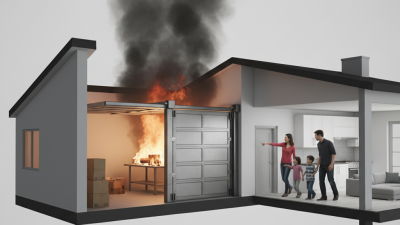
Real fire risk makes small details important. NFPA’s report on United States fire losses during 2023 recorded about 1,388,500 fires and 3,670 civilian deaths. A correctly rated door can slow smoke and flame movement, especially in corridors, stairwells, and utility rooms. It cannot compensate for gaps, damaged seals, or poor installation.

Inspect the edges.

Mineral-core doors can be heavier than expected. That affects hinges, frames, delivery, and daily use. Some specifications also overlook moisture exposure and repeated impact. I would not select a 90-minute door from its label alone. Verify local code acceptance, certified dimensions, hardware compatibility, and maintenance access before placing a global order.

Sound-Control Hollow Doors: Comparing STC 20–35 Performance Levels

For global buyers in 2026, sound-control hollow doors deserve careful comparison. Their performance usually falls between STC 20 and STC 35. These levels suit different rooms, budgets, and privacy expectations.

An STC 20 door can reduce ordinary speech, hallway movement, and light office noise. It may work well for bedrooms, storage rooms, or basic interior partitions. STC 25 to 30 offers stronger privacy for meeting rooms, clinics, classrooms, and shared housing. An STC 35 model can limit louder voices and television sounds more effectively. However, it will not create a recording studio. Quiet is relative.

Door construction matters as much as the rating. Honeycomb, tubular, and engineered-core designs can deliver different weight, stiffness, and acoustic results. A heavier core often improves sound reduction, but it may require stronger hinges and a more accurate frame. Perimeter seals and a tight bottom gap are essential. Small installation gaps can undermine laboratory performance. Details matter.

Buyers should request test reports from recognized acoustic laboratories and check the complete door-set rating. A slab tested alone may perform differently after fitting hinges, glazing, locks, and frames. Local climate also deserves attention, especially humidity and temperature changes. I would not treat STC as a promise. Field results vary, and installers need clear fitting instructions. Comparing tested assemblies, warranty terms, and replacement-part availability can prevent expensive mistakes.

Global Selection Guide: Climate, U-Values, Certifications, and Total Cost

2026 Best Hollow Door Types for Global Buyers?

Climate should guide the core before appearance. Honeycomb paper cores suit dry interiors and light traffic. Tubular particleboard cores offer better impact resistance. Mineral cores deserve attention in humid, high-rise, or fire-sensitive projects. However, moisture resistance depends on the skins, edges, seals, and installation—not the core alone. The IEA’s Energy Efficiency 2023 report states that buildings consume about 30% of global final energy. Small envelope decisions still matter.

Ask suppliers for a tested whole-door U-value, expressed in W/m²K. Do not accept a core-only figure. Exterior doors should include applicable EN 14351-1 or NFRC testing, while fire doors need regional evidence, such as EN 1634-1 or UL 10C testing. Certification scope matters. A certificate for one size may not cover another size or hardware set. Total cost includes freight, duty, fitting, replacement, and maintenance. A cheaper hollow door can lose its advantage after swelling, repainting, or early replacement. A neat spreadsheet can still miss site reality.

Tips: Compare three climate scenarios: dry, coastal, and cold. Check edge sealing with a physical sample. Request acoustic, fire, and moisture reports separately. Calculate cost per installed year, not per door. Be careful with very low U-values; they may indicate a heavier construction that raises transport and hardware costs. These trade-offs are easy to overlook.

Sources: International Energy Agency, Energy Efficiency 2023; UNEP GlobalABC, Global Status Report for Buildings and Construction 2024.

2026 Best Hollow Door Types for Global Buyers? – Global Selection Guide: Climate, U-Values, Certifications, and Total Cost

Hollow Door Type Typical Construction Indicative Door U-Value
(W/m²·K)
Typical Weight
(kg/m²)
Approx. Acoustic Rating
(Rw/STC)
Best Climate / Application Moisture and Durability Profile Relevant Certification or Test Route Indicative 2026 Supply + Standard Installation Cost
(USD/m²)
Global Buyer Assessment
Paper Honeycomb, Wood-Faced Wood veneer, plywood or hardboard skins bonded to a recycled paper honeycomb core; usually 30–45 mm thick. 2.0–3.0 12–20 18–25 dB / 20–27 Dry, temperate interiors; bedrooms, offices and low-use residential rooms. Low resistance to standing water, high humidity and repeated impact. Requires sealed edges and dry storage. EN 14351-2 where applicable; EN 13501-1 reaction-to-fire classification; FSC or PEFC chain-of-custody for certified wood; formaldehyde testing to EN 717-1 or equivalent. 70–150 Lowest-cost and lightest option. Best for interior use, not exposed entrances or wet rooms.
Tubular Particleboard Core Perforated or tubular chipboard core between wood-based facings; commonly 35–45 mm thick. 1.8–2.6 20–30 26–31 dB / 28–33 Temperate and mixed climates; apartments, hotels and general interior partitions. Better screw-holding and impact resistance than paper honeycomb, but vulnerable to swelling if unsealed. EN 13986 for wood-based panels; EN 13501-1; EN ISO 10140 or ASTM E90 for laboratory sound testing; low-emission testing where required by local regulations. 95–190 A balanced choice when moderate acoustic performance and hardware strength are more important than minimum weight.
Steel-Skinned Honeycomb Core Galvanized or pre-finished steel skins with paper, steel or mineral honeycomb infill; typically 40–50 mm thick. 1.8–2.8 25–40 28–35 dB / 30–37 Commercial interiors, utility rooms and high-traffic buildings in dry or moderately humid climates. Good impact resistance. Corrosion protection, edge sealing and compatible hardware are essential in coastal or tropical locations. EN 14351-1 or EN 16034 where applicable; EN 1634-1, UL 10C or NFPA 252 for fire-door assemblies; ISO 9227 salt-spray testing for corrosion evaluation. 130–260 Durable and easy to clean, but thermal bridging and condensation can occur without a properly insulated frame and threshold.
Mineral-Wool Honeycomb or Cellular Mineral Core Steel or timber facings surrounding a lightweight mineral-fibre or mineral-cellular core. 1.4–2.2 30–50 30–40 dB / 32–42 Fire-separated corridors, public buildings and projects requiring improved fire or acoustic performance. Non-combustible core options offer strong fire performance; moisture resistance depends on the skins, adhesives and edge details. EN 1634-1 or UL 10C/NFPA 252 for fire resistance; EN 13501-1 classification; EN ISO 10140 or ASTM E90 for acoustics. 180–360 Higher initial cost, but suitable where fire, smoke, acoustic or durability requirements justify a tested assembly.
Fibreglass-Reinforced Plastic (GRP) Hollow Door GRP or composite skins with a honeycomb, foam or cellular internal structure; commonly used as a complete door set. 1.3–2.3 18–32 25–35 dB / 27–37 Tropical, coastal, wet, saline or hygienic environments; schools, healthcare and food-processing areas. Very good resistance to water, rot, salt air and many chemicals. UV stability and resin quality should be verified. EN 14351-1 or local exterior-door requirements; EN 13501-1; ASTM D570 water absorption; ASTM B117 or ISO 9227 corrosion exposure for metal components. 220–450 Strong lifecycle option in wet or coastal climates, although repairability and end-of-life recycling may be more limited than timber or steel.
Cellular PVC or Composite Hollow Door Extruded cellular PVC or polymer-composite skins and internal ribs, cells or lightweight infill. 1.2–2.0 16–28 24–34 dB / 26–36 Humid, rainy and coastal residential or light-commercial interiors; bathrooms and utility areas when specifically approved. Does not rot or absorb significant water, but thermal expansion, UV ageing and hinge reinforcement must be considered. EN 12608 for relevant PVC profiles; EN 13501-1 reaction-to-fire testing; weathering and dimensional-stability testing to the applicable product standard. 160–330 Low maintenance and moisture-resistant, but verify fire classification and long-term colour stability before exterior use.
Aluminium Honeycomb Composite Door Aluminium skins with an aluminium honeycomb core; may include thermal breaks or additional insulating layers. 1.5–2.6 18–30 25–36 dB / 27–38 Hot, humid and coastal climates; modern commercial façades and high-use institutional buildings. Strong corrosion resistance when correctly coated and isolated from incompatible metals; highly conductive without thermal breaks. EN 14351-1, EN 12207 air permeability and EN 12208 watertightness where applicable; EN 13501-1; ISO 9227 for coating and corrosion assessment. 240–500 Long service life and low maintenance, but usually higher purchase cost and potentially poor thermal performance without a thermal break.
Insulated Steel Cellular-Core Door Galvanized steel skins with a cellular, polystyrene, polyurethane or mineral-based insulated core; generally 40–60 mm thick. 0.8–1.6 30–50 30–42 dB / 32–44 Cold climates, conditioned buildings, plant rooms and exterior service entrances where heat loss matters. Good thermal performance and impact resistance. Check coating durability, thermal bridging, condensation risk and edge protection. EN 14351-1 or relevant national door standard; EN 1634-1, UL 10C or NFPA 252 for fire assemblies; EN ISO 10077-1 or ISO 12567-1 for thermal calculation or testing. 200–420 Usually the strongest energy-efficiency choice among hollow or cellular steel doors, particularly when supplied as a tested complete door set.
Data basis and buying notes: U-values are indicative ranges for complete door leaves or standard door sets under typical laboratory conditions; actual performance depends on thickness, frame, glazing, threshold, seals, hardware and installation. Acoustic values are approximate laboratory ranges and should not be treated as project guarantees. Cost ranges are broad 2026 international benchmarks for supply plus standard installation in USD per square metre, excluding freight, import duty, taxes, unusual openings, certified fire hardware and project-specific testing. Fire, smoke, acoustic, weather and energy claims are valid only when the complete door assembly has been tested or calculated to the applicable local standard.